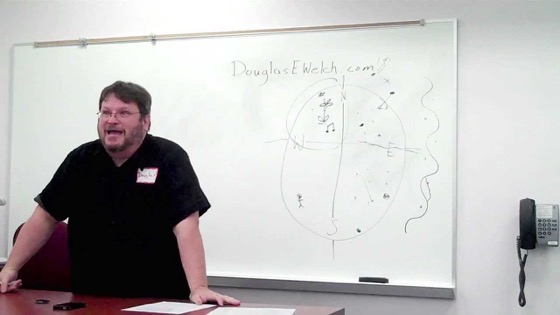
Lately, when asked to describe Career Opportunities I have found that I can better describe it by what it is not. Career Opportunities isn’t about resumes, interviewing, climbing the corporate ladder or many of the topics covered in more typical career forums. I figure that there are plenty of places you can go to find that information, including one of my favorite podcasts, Manager Tools.
Instead, Career Opportunities is about you and your career. It is your career after all…nobody else’s. While so many people see their career as something that happens to them, I want you to reach out and actively manage your career. Instead of simply moving from job to job as they are presented to you, I want you to think deeply about how one job leads to another and how a series of jobs develops into a career. I want you to understand that you need to make the career decisions that are best for you, even if they might not be the best decision for your company. I want you to understand that you have a level of control over your career, despite the fact that many people who will try to convince you that you don’t.
While I have touched on many of these ideas in past columns, I wanted to take this time to explicitly discuss them and reinforce their importance to you and your career. Sometimes in the chaos that work can be, we can forget about these important rules and allow our careers to get off-track. We can allow the crisis of the moment to prevent us from making the best decisions.
Leading your career
With the current economic downturn, we can let our fears about layoffs, downsizing and outsourcing keep us in a job longer than we should. A bad job is a bad job, regardless of the economic climate. One of the worst scenarios I see at these times is someone who is working the best they can in a difficult job and then ends up on the layoff roll anyway. So not only are their producing for a company they don’t respect, they are then handed the added insult of losing a job that wasn’t even that good. They were thinking that any job was better than no job and ended up wasting time working when they could and should have been looking for a new, better career move.
You are the master, the CEO, the captain of your career and you must step up and take that responsibility.
Sure, looking for a new job in tough times requires more planning and finesse, but you certainly shouldn’t allow it to prevent you from leading your career. You have to be more careful about how you conduct your search — you don’t want to lose your current job before you are ready. You also have to make sure that your new company isn’t suffering from the same ills as your current one, whether those ills be economic or managerial. The old adage about “jumping from the frying pan into the fire”, still applies to this day.
What is best for you?
Once you find a new position, you also shouldn’t let feelings of loyalty to a company or to a manager override your career needs. Remember, this is your career. You have to live with it every day. Will your departure leave the department shorthanded? So be it. That is a problem the company must deal with on their own. You can make your departure as painless as possible, but staffing issues aren’t under your control. You have to do what is best for you and your career despite its effect on the company. Why is that? Simply, because the company will act in the same way, in their own best interest, when necessary. If your company needs to layoff 100 people, they will do it, because they must, with only limited concerns about how it might effect you.
You are the master, the CEO, the captain of your career and you must step up and take that responsibility. No one else will ever care as much about your career as you do. They are not as invested in your career as you are. They might help you along, develop your skills and provide opportunities to grow, but only you can make the, sometimes, difficult decisions that insure your career thrives and develops into the career that you deserve.
While your high-tech work often has its ups and downs, some weeks can do a wonderful job reminding you what your work is all about. Some of the lessons you learn are new and others are simply a re-education in something you may have forgotten. Regardless, these are important lessons to remember. This week I want to relate a few of the lessons that have been reinforced for me during this abnormally busy week. Perhaps you can use them as a way of examining the lessons you learn on a daily basis.
With any endeavor, there is always a vision in our mind of what we wish that endeavor to be. This ideal vision is important, as it gives us something to strive toward. It helps to focus our goals and vision and, most importantly, it helps us to know when we have succeeded.
With individual projects, your vision and your goals are all you need to consider when determining action and success. In shared projects, though, you don’t have the luxury of thinking only of yourself. Each participant will have their own visions and goals for the project. In the most successful projects, shared goals will be developed that can be accepted by most of the participants. These shared goals are dramatically important as without them all the individual goals will conflict and the project will suffer.
In a project without shared goals, it is very easy for the participants to confuse the reality of a project with what they wish were true. This is a very dangerous place to find yourself. It gives you a distorted view of your project and can cause you to make bad decisions for both yourself and those around you.
You have probably seen this in your own work already. A manager may have very clear view of how their project should be executed …how they wish the project would work. Unfortunately, their staff often sees it differently. They see fundamental flaws that will prevent the project from ever meeting the wishes of their manager, but the project continues, without shared goals to guide it. Worse still, failing to recognize these flaws often leads to larger mistakes which brings the project closer to failure.
It is good to have goals and wishes for your projects, but as an old saying goes, “if wishes were horses, then beggars would ride.” Wishes alone can’t guarantee a successful project. Wishes, held up against the flawed reality that exists, do. Constantly comparing your wishes to your reality is what leads to success — not pretending all is well, even when it isn’t.
It is good to have goals and wishes for your projects, but as an old saying goes, “if wishes were horses, then beggars would ride.” Wishes alone can’t guarantee a successful project.
Finally, what applies to our projects also applies to our careers. Sometimes we can try to fool ourselves into believing that our job is exactly what we wish it to be. The bad parts are merely exceptions to the otherwise happy state of our existence. We do this for a variety of reasons. Obviously, the job we have is better than no job at all, so we tell ourselves little lies that allow us to continue working. It is a normal, if not always productive, behavior. Otherwise, we might quit our job as soon as one bad thing occurred. Still, if you find yourself constantly making excuses for your lousy job, then you could be facing big problems. One day you will wake up and find that the situation has gone from bad to intolerable. No amount of wishing will be able to change that.
You goal, in your projects and in your career, is to actively monitor the situation — day to day and week to week — making small adjustments along the way that gradually bring your wishes and reality closer together. Don’t let your wishes and dreams blind you to what is truly happening. Dream your dreams, but ground them in a solid understanding of the gap that remains. In this way, you benefit from both the dreams you have and the good work that you do.
I am sure you have seen this before. A new technology is announced and it takes only moments before writers across the globe start to predict its demise. There is a rush to discount the new technology in a hundred different ways, explaining, in great detail, exactly when and why it will never work. I wish I had such foresight. Imagine the riches that would follow if you were able to know these things with such certainty. Of course, as you already know, most pundits are wrong most of the time. This is one major reason I steer clear of such “pile-ons”. I would much rather help people find the technologies that work for then instead of worrying about those that may, or may not, fail.
Heads Will Roll: 17 Signs of Impending Layoffs
By Brian Satterfield on April 29, 2008
As Bob Dylan once sang, “You don’t need a weatherman to know which way the wind blows.” And while that adage can be applied to any number of situations, it can be especially true when it comes to job cuts, layoffs and corporate restructuring.
Meetups are everywhere and the topics they support include technology, sewing, writing and a thousand other things. You might even attend some of these meetups or other user group meetings or conferences on a regular basis but have you ever thought of starting a meetup of your own? Surely there is some area where you would like to share your interests with other people. While meetups and user groups can be fun, they can also be a way to enhance your career while learning new things and having a great time.
First, let me be clear that organizing anything – whether a meetup, a project, a family reunion – can be a lot of work. There is no denying that. Still, if you are having fun with the project, all the work will seem worth it in the end. In fact, that will always be the defining factor of your work. Is it fun?
Even with this work, there are many benefits to organizing a group. The most important benefit you derive is the major expansion of your personal network. While most members of your group will know a few other members, everyone in the group will know you. Whether you are just talking to them at your meetup, or connecting to them through Facebook, MySpace or LinkedIn, you will gain contact with a large group of people who you can help and who can also help you. Becoming an organizer greatly increases your Visibility (See Visibility and Your Career Video). You will be introducing yourself to new people at every single meetup and every time you talk about your group to others.
Through your new found visibility, you can become a “connector” someone who regularly connects talent with those who need it — someone who is asked to offer recommendations for products and services – someone people seek out when they need advice or a new job.
Organizing can also effect how you are perceived by others. I know that I have a profound bias towards those people who can “get things done.” Organizing a group is a management task, even if you are still working as a departmental staffer. It is a way to both gain experience, and demonstrate your abilities, to anyone who is watching. Being the founder or president of a group can look very good on your resume, especially early in your career, when you don’t have much work history. It shows drive. It shows initiative and it shows the ability to be organized and organize others towards a central goal.
Organizing can also effect how you are perceived by others. It is a way to both gain experience, and demonstrate your abilities, to anyone who is watching. Being the founder or president of a group can look very good on your resume, especially early in your career, when you don’t have much work history.
There is one important caveat to all this organizing, though. You must always remember that the group is not you and you are not the group. Too many organizers end up leaving the group they started because they find it difficult to let others have a voice in managing and directing the focus of the group. I always try to remember that the group will dictate its own direction after a while. I can provide the impetus, the place to meet, the original members, but eventually the members will take the group in whatever direction they see fit. This may not always mesh with your own personality or desires, but it is inevitable. In most cases, this is not a personal attack or a refutation of your goals, only a clear indicator of the shared goals of the group. You ignore that at your peril. You may find that it is a perfect excuse to go and start that next group that focuses on another of your goals.
Organizing any group, whether for a project, hobby or work, is a great way to develop work experience, improve your visibility and expand your network. Furthermore, it is both entertaining and enlightening. If you have a special interest in your life, why not share it with others and organize a group today. Your career is sure to benefit.
Usually when we have the thought, “I’ve got to get out of town”, we are thinking about recreation – getting away from it all. While there is always some benefit to leaving your day-to-day world behind, I think there is another side to “getting out of town.” Instead of running away from the stress of your life and your job, maybe you should think about running to something new, something interesting, something fresh.
Special Note: I want to highlight the listeners of Career Opportunities here on the web site. Send me a 100 word description of you and your web site and I will start to include them here. Email to career@welchwite.com.
What is an entrepreneur? How do you become one? Is it worth the time, energy and aggravation? Recently, Rob Spahitz, a reader of this column, posted to a discussion on the Career-Op mailing list. In his message he said, “How about an article on what’s required to be a good entrepreneur?” An excellent idea, I thought, except that my own experience doesn’t follow what most would consider an entrepreneurial direction. I don’t have great designs on owning a large company with lots of employees and millions of dollars in gross earnings, but I do think there is a different side to the entrepreneur story than what we typically see in the papers. Rob’s question started me thinking more deeply about entrepreneurship, what it means to me and what it might mean to you.
Ok, this trailer got me. Now I want to see the book. I hope it lives up to the video. It sounds like its sensibilities are very much in line with my own.