The act of drawing itself is more important than the results… from A Gardener’s Notebook

The act of drawing itself is more important than the results.

The act of drawing itself is more important than the results. The goal of sketching in the garden is to see things more clearly not necessarily make a perfect reproduction of them on paper.

From A Gardener’s Notebook by Douglas E. Welch DouglasEWelch.com

Buy or Download a sample of From A Gardener’s Notebook via Amazon.com

From A Gardener’s Notebook by Douglas E. Welch DouglasEWelch.com

Previously from A Gardener’s Notebook:

Interesting Plant: Rudbeckia

Rudbeckia

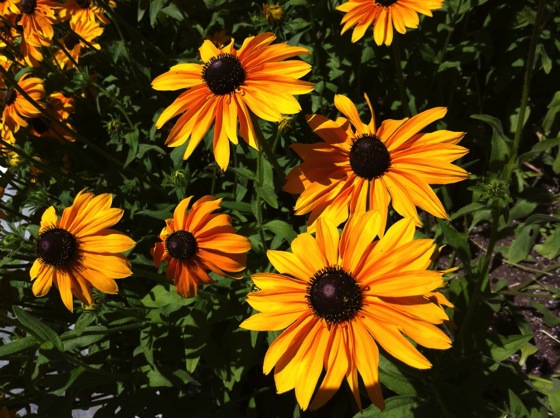
The sheer exuberance of these black-eyed susan took my breath away. More gold than than the shiniest gold bars, with the contrasting black/brown centers seems like something a painter would design rather than nature. I came across this clump of rudbeckia in nearby La Crescenta, California, just up the street from Descanso Gardens.

Interesting Plant: Rudbeckia Interesting Plant: Rudbeckia Interesting Plant: Rudbeckia

Rudbeckia

Rudbeckia /rʌdˈbɛkiə/[1] is a plant genus of 23 species in the family Asteraceae.[2] The species are commonly called coneflowers and black-eyed-susans; all are native to North America and many species are cultivated in gardens for their showy yellow or gold flower heads.

The species are herbaceous, mostly perennial plants (some annual or biennial) growing to 0.5–3 m tall, with simple or branched stems. Theleaves are spirally arranged, entire to deeply lobed, 5–25 cm long. The flowers are produced in daisy-like inflorescences, with yellow or orange florets arranged in a prominent, cone-shaped head; “cone-shaped” because the ray florets tend to point out and down (are decumbent) as the flower head opens.” . — Wikipedia.org

 
More information on Rudbeckia:

* A portion of all sales directly support A Gardener’s Notebook
** Some of the books may be available at your local library. Check it out!

Previously in the Interesting Plant series: 

Interesting Plant is a series from A Gardener’s Notebook blog and podcast that highlights the most interesting plants I find in my Internet and real-world travels — Douglas

Summer in the Garden: Barcelona Bird Feeder

I am always keeping a eye out for decent products for my own garden — even if they are just for my wish list. Over the course of the next few weeks, I’ll be highlighting a series of products that might fit in my garden — or yours! — Douglas


Barcelona Bird Feeder

Summer in the Garden: Barcelona Bird Feeder

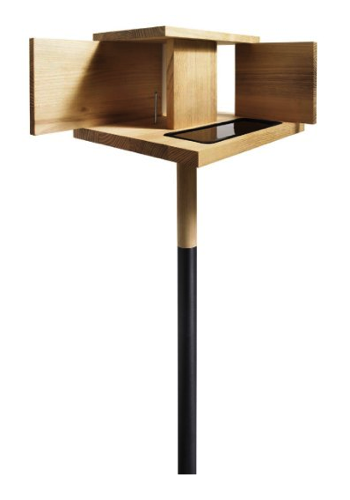
I am a sucker for bird feeders of all kinds and this modern architecture-style birdhouse would look great in almost any garden. Give your garden inhabitants a bit of flash for their meal time. (LAUGH)

More bird feeders from Amazon.com

* A portion of each sale from Amazon.com directly supports our blogs

Previously in Summer in the Garden:

Noted: New Ways to Think About All That Mulch in the Garden via Houzz

New Ways to Think About All That Mulch in the Garden via Houzz

I couldn’t say any of this — I feel bad talking about it now, like I’m some sort of landscape backseat driving jerk for even mentioning my thoughts. It’s her house, her yard, her plants. But the mulch. The mulch. So instead of talking to my neighbor, I’ll talk to you about why wood mulch can be both great and, well, not very great at all — and what a better alternative might be. modern landscape by Blasen Landscape Architecture

Types of wood mulch.

We’ve been taught that wood mulch is essential, and in a lot of ways it is. If you use it, chunky wood mulch at a depth of 3 to 4 inches is best at suppressing weeds and adding organic matter to the soil, while also allowing good water infiltration. Finely shredded wood mulch tends to create a dense, impermeable mat and even blow away, but it’s great at weed suppression. The point here is that the kind of wood mulch you use matters. And don’t use cypress, as it’s often harvested unsustainably (of course, it wouldn’t surprise me if all wood mulch is harvested unethically).

Read More


“Noted” items are particularly good finds from my daily reading which I share via all my social media accounts. 

Find more Noted/Shared Gardening items

Garden Alphabet: Oleander (Nerium)

Oleander (Nerium)

Oleander is an extremely common landscape plant around here and, as familiarity breeds contempt, I haven’t thought much about it. In most yards it grows huge and out of control, used only as screening from the street. It does flower nice and, when kept in check, it can be a nice — if bland — addition as a hedge or divider in the garden. Many people don’t realize how poisonous oleander can be, but I haven’t heard of any recent issues with that in our area.

Garden Alphabet: Oleander via Instagram

Follow DouglasWelch in Instagram

Nerium oleander /ˈnɪəriəm ˈl.ændər/[3] is an evergreen shrub or small tree in the dogbane family Apocynaceae, toxic in all its parts. It is the only species currently classified in the genus Nerium. It is most commonly known asoleander, from its superficial resemblance to the unrelated olive Olea.[Note 1] It is so widely cultivated that no precise region of origin has been identified, though southwest Asia has been suggested. The ancient city of Volubilisin Morocco may have taken its name from the Berber name oualilt for the flower.[4] Oleander is one of the most poisonous of commonly grown garden plants.

[…]

Nerium oleander has historically been considered a poisonous plant because some of its compounds may exhibit toxicity, especially to animals, when consumed in high amounts. Among these compounds are oleandrin andoleandrigenin, known as cardiac glycosides, which are known to have a narrow therapeutic index and can be toxic when ingested.

Toxicity studies of animals administered oleander extract concluded that rodents and birds were observed to be relatively insensitive to oleander cardiac glycosides.[12] Other mammals, however, such as dogs and humans, are relatively sensitive to the effects of cardiac glycosides and the clinical manifestations of “glycoside intoxication”.[12][13][14]

However, despite the common “poisonous” designation of this plant, very few toxic events in humans have been reported. According to the Toxic Exposure Surveillance System, in 2002, 847 human exposures to oleander were reported to poison centers in the United States.[15] Despite this exposure level, from 1985 through 2005, only three deaths were reported. One cited death was apparently due to the ingestion of oleander leaves by a diabetic man.[16] His blood indicated a total blood concentration of cardiac glycosides of about 20 μg/l, which is well above the reported fatal level. Another study reported on the death of a woman who self-administered “an undefined oleander extract” both orally and rectally and her oleandrin tissue levels were 10 to 39 μg/g, which were in the high range of reported levels at autopsy.[17] And finally, one study reported the death of a woman who ingested oleander ‘tea’.[18] Few other details were provided.

In contrast to consumption of these undefined oleander-derived materials, no toxicity or deaths were reported from topical administration or contact with N. oleander or specific products derived from them. In reviewing oleander toxicity, Lanford and Boor[19] concluded that, except for children who might be at greater risk, “the human mortality associated with oleander ingestion is generally very low, even in cases of moderate intentional consumption (suicide attempts)”.[19]

Toxicity studies conducted in dogs and rodents administered oleander extracts by intramuscular injection indicated that, on an equivalent weight basis, doses of an oleander extract with glycosides 10 times those likely to be administered therapeutically to humans are still safe and without any “severe toxicity observed”.[20]  — Wikipedia

More information on Oleander (Nerium):

* A portion of each sales directly supports A Gardener’s Notebook
** These books and others may be available in your local library. Check it out!
 
Previously in Garden Alphabet:

Summer in the Garden: Vivere BRAZ211 Brazilian Style Double Hammock

I am always keeping a eye out for decent products for my own garden — even if they are just for my wish list. Over the course of the next few weeks, I’ll be highlighting a series of products that might fit in my garden — or yours! — Douglas


Vivere BRAZ211 Brazilian Style Double Hammock

Hammock

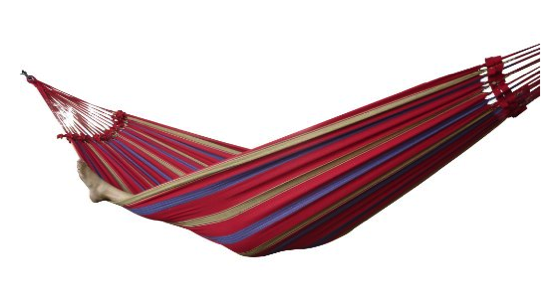
Make sure Summer in the Garden doesn’t turn into “all and no play.” Everyone needs a little time for just “hanging” about the garden. This hammock would make a great addition. There are also hammock hangers that make it easy to attach/detach from the trees in your yard or campsite. What a great way to relax after a long day of planting and weeding.

More hamocks and accessories from Amazon.com


* A portion of each sale from Amazon.com directly supports our blogs

Previously in Summer in the Garden:

Noted: Advice on Canyon Farming From L.A.’s Vegetable Whisperer via Houzz

Advice on Canyon Farming From L.A.’s Vegetable Whisperer via Houzz

The edible garden is a thing of beauty. It’s personal, and like singing a song, there is no one right way to do it. Lauri Kranz is certainly getting it right. She’s been hailed as the vegetable whisperer of Los Angeles, creating entrancing and productive edible havens. “I believe in wildness,” she says. Rules on the backs of seed packets dictate how to grow the vegetables, but how you put everything together is an entirely artistic endeavor.

Read More


“Noted” items are particularly good finds from my daily reading which I share via all my social media accounts. 

Find more Noted/Shared Gardening items

Noted: 5 Gardens to Inspire Your Outdoor Rooms via Houzz

5 Gardens to Inspire Your Outdoor Rooms

Nearly 30 years the Gamble Garden Spring Tour has unlocked the gates to some of the most exclusive residential landscapes in Palo Alto, California, giving visitors a chance to experience what lies beyond the sidewalk. The tour benefits the Elizabeth F. Gamble Garden, a horticultural nonprofit. Each year it showcases five exceptional gardens, providing home and garden enthusiasts with a bevy of inspiration for their own outdoor sanctuaries.

Like the tech industry that surrounds them, this year’s gardens were bursting with ideas. Though nothing quite beats the crunch of gravel underfoot or the perfume of citrus blooms warming in the sun, if you look at these photos long enough, you may just be able to see the grass blowing in the breeze.

Read More


“Noted” items are particularly good finds from my daily reading which I share via all my social media accounts. 

Find more Noted/Shared Gardening items

Summer in the Garden: Teak Potting Bench

I am always keeping a eye out for decent products for my own garden — even if they are just for my wish list. Over the course of the next few weeks, I’ll be highlighting a series of products that might fit in my garden — or yours! — Douglas


Home Styles Bali Hai Potting Bench, Natural Teak

Teak potting bench

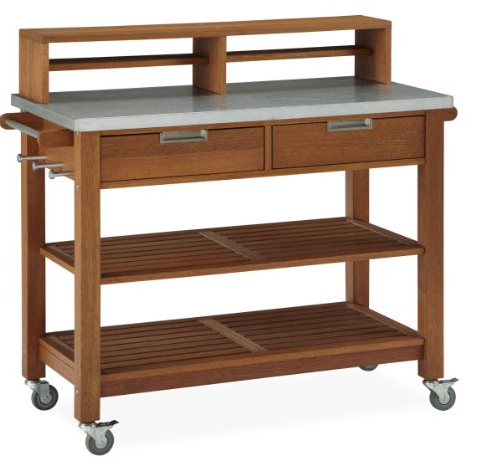
I would love this potting bench in my own garden. I don’t really need the wheels, as my garden is rustic paths with wood chips, but the storage and work surfaces are excellent. This would certainly be an upgrade from the repurposed door and sawhorses I have now. (LAUGH)

More potting benches and information from Amazon.com

* A portion of each sale from Amazon.com directly supports our blogs

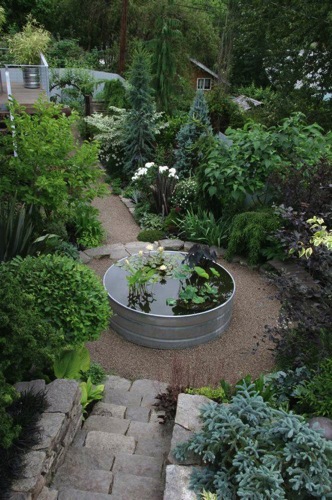
Garden Decor: Stock tanks as garden ponds

Stock tanks as garden ponds

I have always wanted a garden pond but dreaded the work of digging and lining and in-ground pond. I have seen stock tanks used for a variety of purposes, and it only makes sense to put them to work in the garden, too. I think I still have to many trees in my garden to make this practical, due to all the leaves they drop, but I will store this idea away for later.

Stock tank garden

Discovered via Pinterest User, Rufina Ebersol

More stock tanks from Amazon.com


 * a portion of each Amazon sales goes directly to support A Gardener’s Notebook
** some of these books may be available at your local library. Check it out!
 
Previously in Garden Decor: