Category Archives: Garden Alphabet

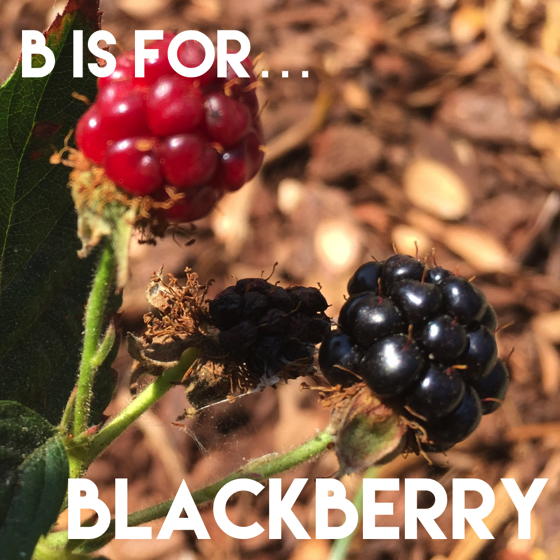
Garden Alphabet #90: B is for…Blackberry

Garden Alphabet #90: Blackberry

Monrovia Black Satin Blackberry in my garden today.

garden-alphabet-blackberry

The blackberry is an edible fruit produced by many species in the Rubus genus in the Rosaceae family, hybrids among these species within the Rubus subgenus, and hybrids between the Rubus and Idaeobatus subgenera. The taxonomy of the blackberries has historically been confused because of hybridization and apomixis, so that species have often been grouped together and called species aggregates. For example, the entire subgenus Rubus has been called the Rubus fruticosus aggregate, although the species R. fruticosus is considered a synonym of R. plicatus.[1]

What distinguishes the blackberry from its raspberry relatives is whether or not the torus (receptacle or stem) “picks with” (i.e., stays with) the fruit. When one picks a blackberry fruit, the torus does stay with the fruit. With a raspberry, the torus remains on the plant, leaving a hollow core in the raspberry fruit.

The term bramble, a word meaning any impenetrable thicket, has traditionally been applied specifically to the blackberry or its products,[2] though in the United States it applies to all members of the Rubus genus. In the western US, the term caneberry is used to refer to blackberries and raspberries as a group rather than the term bramble.

The usually black fruit is not a berry in the botanical sense of the word. Botanically it is termed an aggregate fruit, composed of small drupelets. It is a widespread and well-known group of over 375 species, many of which are closely related apomictic microspecies native throughout Europe, northwestern Africa, temperate western and central Asia and North and South America.[3]

— Wikipedia.org

More information on Tomato:
 
 
Plants and Seeds:


* A portion of each sale from Amazon.com directly supports our blogs
** Many of these books may be available from your local library. Check it out! 

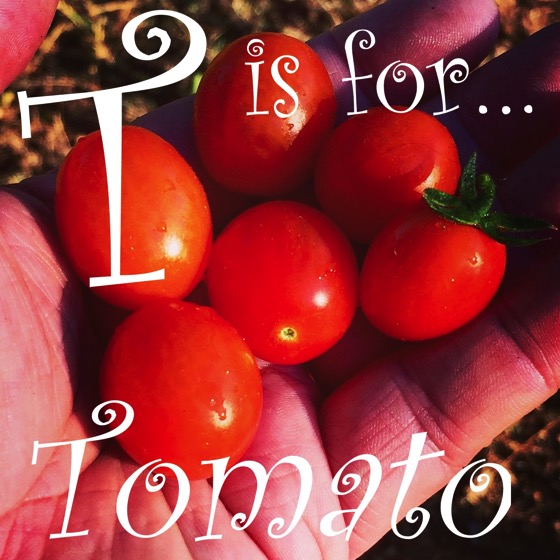
Garden Alphabet #89: T is for…Tomato

Garden Alphabet #89: Tomato

Garden Alphabet: T is for...Tomato

Tomato

The tomato is the edible, often red fruit of the plant Solanum lycopersicum, commonly known as a tomato plant. Both the species and its use as a food originated in Mexico, and spread around the world following the Spanish colonization of the Americas. Its many varieties are now widely grown, sometimes in greenhouses in cooler climates.

 The tomato is consumed in diverse ways, including raw, as an ingredient in many dishes, sauces, salads, and drinks. While it is botanically a fruit, it is considered a vegetable for culinary purposes (as well as by the United States Supreme Court, see Nix v. Hedden), which has caused some confusion. The fruit is rich in lycopene, which may have beneficial health effects.

 The tomato belongs to the nightshade family. The plants typically grow to 1–3 meters (3–10 ft) in height and have a weak stem that often sprawls over the ground and vines over other plants. It is a perennial in its native habitat, although often grown outdoors in temperate climates as an annual. An average common tomato weighs 102–105 grams.[2][3] — Wikipedia.org

More information on Tomato:
 
Plants and Seeds:
  

* A portion of each sale from Amazon.com directly supports our blogs
** Many of these books may be available from your local library. Check it out! 

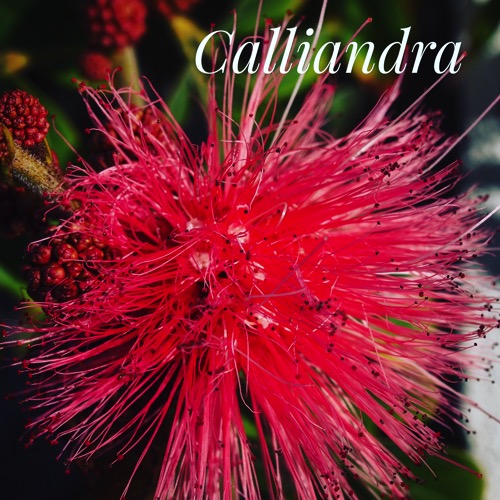
Garden Alphabet: Calliandra

Garden Alphabet: Calliandra

Garden alphabet calliandra

The genus comprises herbaceous perennial plantsshrubs and rarely small trees growing 0.5–6 m tall, with bipinnate leaves. The flowers are produced in cylindrical or globose inflorescences and have numerous long slender stamens which give rise to the common names powder-puffpowder puff plant, and fairy duster. These plants flower all year round, but the best blooming is in spring and summer. They can be easily pruned. — Wikipedia


Get my photos a variety of products including tote bags, mugs, posters and more! 

Acanthus productsButterfly products


More information on Calliandra:

Learn more about Calliandra in these books

* A portion of each sale from Amazon.com directly supports my blogs

** Many of these books may be available from your local library. Check it out! 

Previously in Garden Alphabet:

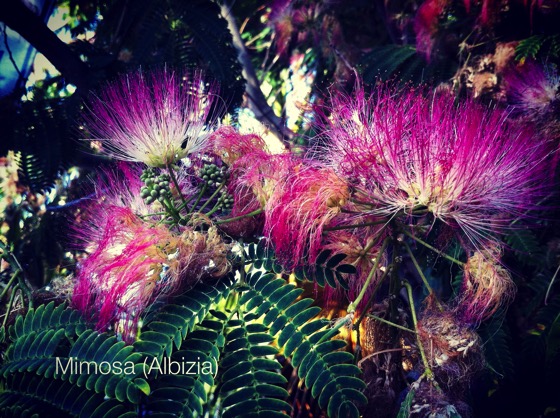
Garden Alphabet: Mimosa (Albizia julibrissin)

Garden Alphabet: Mimosa (Albizia julibrissin)

Mimosa

The genus is named after the Italian nobleman Filippo degli Albizzi, who introduced it to Europe in the mid-18th century, and it is sometimes incorrectly spelled Albizzia. The specific epithet julibrissin is a corruption of the Persian word gul-i abrisham (گل ابریشم) which means “silk flower” (from gul گل “flower” + abrisham ابریشم “silk“).

Albizia julibrissin is known by a wide variety of common names, such as Persian silk tree or pink siris. It is also called Lenkoran acaciaor bastard tamarind, though it is not too closely related to either genus. The species is usually called “silk tree” or “mimosa” in the United States, which is misleading – the former name can refer to any species of Albizia which is most common in any one locale. And, although once included in Mimosa, neither is it very close to the Mimoseae. To add to the confusion, several species of Acacia, notablyAcacia baileyana and Acacia dealbata, are also known as “mimosa” (especially in floristry), and many Fabaceae trees with highly divided leaves are called thus in horticulture.

Its leaves slowly close during the night and during periods of rain, the leaflets bowing downward; thus its modern Persian nameshabkhosb (شب‌خسب) means “night sleeper” (from shab شب‌ “night” and -khosb خسب “sleeper”). In Japan its common names arenemunokinemurinoki and nenenoki which all mean “sleeping tree”. Nemu tree is a partial translation of nemunoki— Wikipedia


Get my photos a variety of products including tote bags, mugs, posters and more! 

Acanthus productsButterfly products


More information on Mimosa (Albizia julibrissin):

Learn more about Mimosa (Albizia julibrissinin these books


* A portion of each sale from Amazon.com directly supports my blogs
** Many of these books may be available from your local library. Check it out! 

Previously in Garden Alphabet:

Garden Alphabet: Snow Plant (Sarcodes sanguinea)

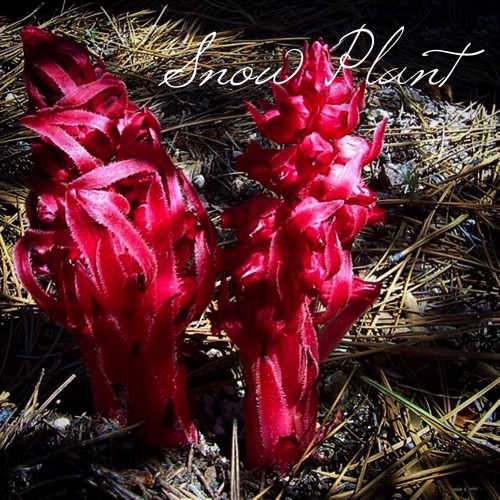
Garden Alphabet: Snow Plant (Sarcodes sanguinea)

Snow plant

Sarcodes is a monotypic genus of a single springtime flowering plant in the heath family (Ericaceae) containing the single species Sarcodes sanguinea, commonly called the snow plant or snow flower. It is a parasitic plant that derives sustenance and nutrients from mycorrhizal fungi that attach to roots of trees. Lacking chlorophyll, it is unable to photosynthesize.[1] Ectomycorrhizal (EM) symbioses involve a mutualism between a plant root and a fungus; the plant provides fixed carbon to the fungus and in return, the fungus provides mineral nutrients, water and protection from pathogens to the plant. The snow plant takes advantage of this mutualism by tapping into the network and stealing sugars from the photosynthetic partner by way of the fungus.[2] 

The plant’s aboveground tissue is its inflorescence, a raceme of bright scarlet red flowers wrapped in many straplike, pointed bracts with fringed edges, themselves bright red to orange in color.[3]

Sarcodes sanguinea is native to montane areas of the California Floristic Province, from the OregonCascade Range (as far north as the Umpqua River), through the mountains of California (though it is absent from the California Coast Ranges between the Klamath Mountains and the Transverse Ranges), and into the Sierra de San Pedro Mártir range of northern Baja California.

Its species epithet sanguinea refers to the striking red flower that emerges from the sometimes still snow-covered ground in early spring or summer; this may be as late as July in high elevations, such as those of the High Sierra Nevada and Cascades.[3] — Wikipedia


Get my photos a variety of products including tote bags, mugs, posters and more! 

Acanthus productsButterfly products


More information on Snow Plant (Sarcodes sanguinea):

Learn more about Snow Plant (Sarcodes sanguinea) in these books

* A portion of each sale from Amazon.com directly supports our blogs
** Many of these books may be available from your local library. Check it out! 

Previously in Garden Alphabet:

Garden Alphabet: Sempervivum [Photo]

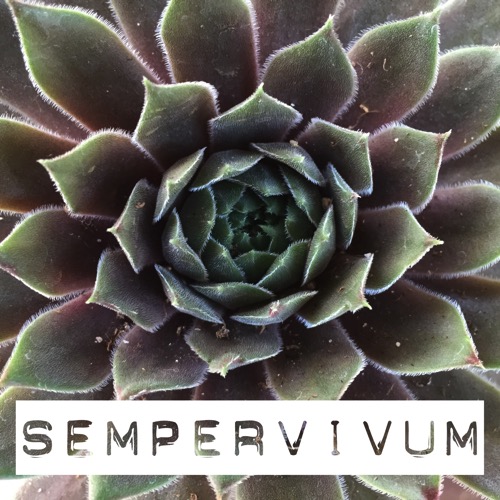
Garden Alphabet: Sempervivum

Sempervivum

Sempervivum /sɛmpəˈvvəm/,[1] is a genus of about 40 species of flowering plants in the Crassulaceae family, known as houseleeks. Other common names include liveforever and hen and chicks. They are succulent perennials forming mats composed of tufted leaves in rosettes. In favourable conditions they spread rapidly via offsets, and several species are valued in cultivation as groundcover for dry, sunny spots.[2]

The name Sempervivum has its origin in the Latin semper (“always”) and vivus (“living”), because this perennial plant keeps its leaves in winter and is very resistant to difficult conditions of growth.[3] The common name houseleek is believed to stem from the traditional practice of growing plants on the roofs of houses to ward off fire and lightning strikes. The Welsh often hold the superstitious belief that having it grow on the roof of the house ensures the health and prosperity of those who live there.[4][5] The plant is not closely related to the true leek, which belongs to the onion family.

Other common names reflect the plant’s ancient association with Thor, the Norse god of thunder, and the Roman Jupiter. Hence names such as “Jupiter’s beard” and the German Donnerbart (“thunder beard”).[3] — Wikipedia


Get my photos a variety of products including tote bags, mugs, posters and more! 

Hollyhock 2014California poppy products


More information on Sempervivum:

Learn more about Sempervivum in these books


* A portion of each sale from Amazon.com directly supports our blogs
** Many of these books may be available from your local library. Check it out! 

Previously in Garden Alphabet:

Garden Alphabet: Hosta

Garden Alphabet: Hosta

Garden alphabet hosta

Hosta (/ˈhɒstə/,[5] syn. Funkia) is a genus of plants commonly known as hostasplantain lilies (particularly in Britain) and occasionally by the Japanese name giboshi. Hostas are widely cultivated as shade-tolerant foliage plants. The genus is currently placed in the family Asparagaceae, subfamily Agavoideae,[6] and is native to northeast Asia (ChinaJapanKorea, and the Russian Far East).[4] Like many “lilioid monocots“, the genus was once classified in the Liliaceae. The genus was named by Austrian botanist Leopold Trattinnick in 1812,[7] in honor of the Austrian botanist Nicholas Thomas Host.[8] In 1817, the generic name Funkia was used by German botanist Kurt Sprengel in honor of Heinrich Funk, a collector of ferns and alpines;[9] this was later used as a common name and can be found in some older literature. 


Hostas are herbaceous perennial plants, growing from rhizomes or stolons,[10] with broad lanceolate or ovate leaves varying widely in size by species from 1–18 in (3–45 cm) long and 0.75–12 in (2–30 cm) broad. The smallest varieties are called miniatures. Variation among the numerous cultivars is even greater, with clumps ranging from less than four in (10 cm) across and three in (8 cm) high to more than six ft (200 cm) across and four ft (130 cm) high. Leaf color in wild species is typically green, although some species (e.g., H. sieboldiana) are known for a glaucous waxy leaf coating that gives a blue appearance to the leaf. Some species have a glaucous white coating covering the underside of the leaves. Natural mutations of native species are known with yellow-green (“gold”) colored leaves or with leaf variegation (either white/cream or yellowish edges or centers). Variegated plants very often give rise to sports that are the result of the reshuffling of cell layers during bud formation, producing foliage with mixed pigment sections. In seedlings variegation is generally maternally derived by chloroplast transfer and is not a genetically inheritable trait.


The flowers are produced on erect scapes, generally taller than the leaf mound, that end in terminal racemes. The individual flowers are usually pendulous, 0.75–2 in (2–5 cm) long, with six petals, white, lavender, or violet in color and usually scentless. The only strongly fragrant species is Hosta plantaginea, which has white flowers up to four in (10 cm) long; it is also unusual in that the flowers open in the evening and close by morning. This species blooms in late summer and is sometimes known as “August Lily”. — Wikipedia


Get my photos a variety of products including tote bags, mugs, posters and more! 

Hollyhock 2014California poppy products


More information on Hosta:


Previously in Garden Alphabet:

Garden Alphabet: Hollyhock (Alcea)

Garden Alphabet: Hollyhock (Alcea

Hollyhock alcea

 Hollyhock (Alcea

Alcea, commonly known as hollyhocks, is a genus of about 60 species of flowering plants in the mallow family Malvaceae.[1] They are native to Asia and Europe.[1]

Hollyhocks are annual, biennial, or perennial plants usually taking an erect, unbranched form. The herbage usually has a coating of star-shaped hairs. The leaf blades are often lobed or toothed, and are borne on long petioles. The flowers may be solitary or arranged in fascicles or racemes. The notched petals are usually over three centimeters wide and may be pink, white, purple, or yellow. The fruit is a schizocarp, a dry disc divided into over 15 sections that contain seeds.[1] — Wikipedia


Get this photo a variety of products including tote bags, mugs, posters and more! 

Hollyhock 2014


More information on Hollyhock (Alcea):

Previously in Garden Alphabet:

Garden Alphabet: Agapanthus (Lily of the Nile)

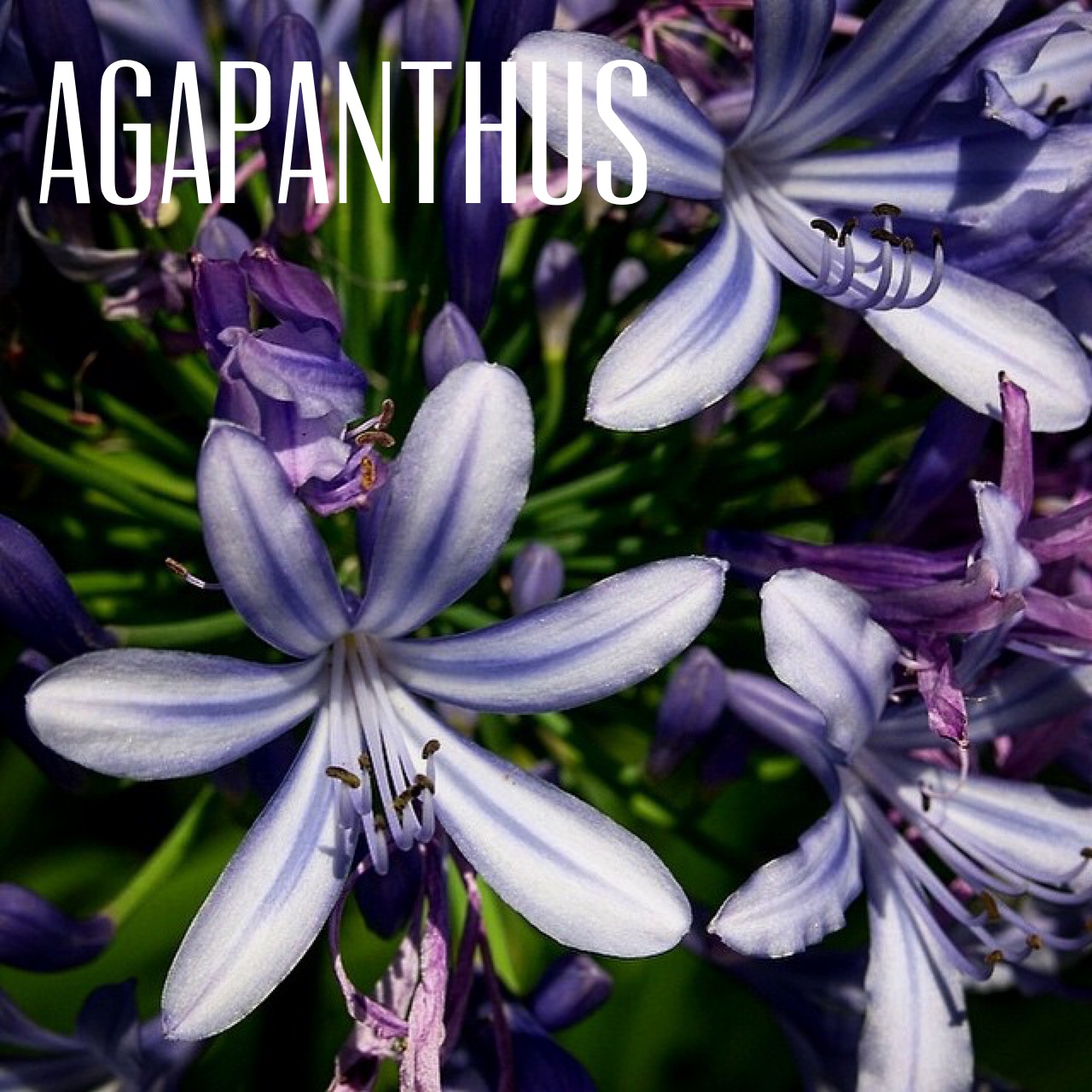
Agapanthus (Lily of the Nile)

agapanthus

Agapanthus /ˌæɡəˈpænθəs/[2] is the only genus in the subfamily Agapanthoideae of the flowering plant family Amaryllidaceae.[3] The family is in the monocot order Asparagales. The name is derived from scientific Greek: αγάπη (agape) = love, άνθος (anthos) = flower.

Some species of Agapanthus are commonly known as lily of the Nile (or African lily in the UK), although they are not lilies and all of thespecies are native to Southern Africa (South Africa, Lesotho, Swaziland, Mozambique) though some have become naturalized in scattered places around the world (Australia, Great Britain, Mexico, Ethiopia, Jamaica, etc.).[1][4]

Species boundaries are not clear in the genus, and in spite of having been intensively studied, the number of species recognized by different authorities varies from 6 to 10. The type species for the genus is Agapanthus africanus.[5] A great many hybrids and cultivars have been produced and they are cultivated throughout warm areas of the world, and can especially be spotted all throughout NorthernCalifornia.[6] Most of these were described in a book published in 2004.[7] — Wikipedia


Get this photo a variety of products including tote bags, mugs, posters and more!

agapanthus-products


More information on Agapanthus (Lily of the Nile)

Previously in Garden Alphabet:

Garden Alphabet: Common Ice Plant (Mesembryanthemum crystallinum)

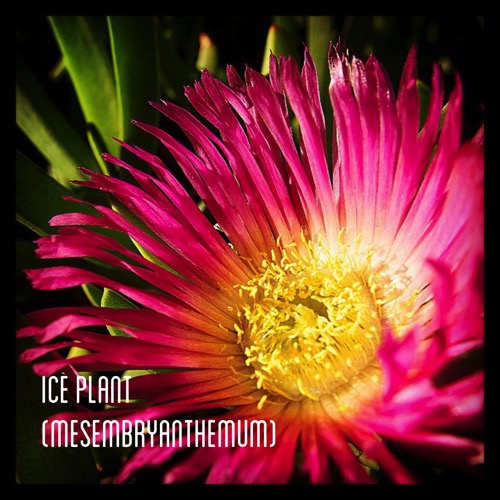
Common Ice Plant (Mesembryanthemum crystallinum)

Ice plant

Mesembryanthemum crystallinum is a prostrate succulent plant native to AfricaSinai and southern Europe, and naturalized in North AmericaSouth America and Australia.[1] The plant is covered with large, glistening bladder cells or water vesicles, reflected in its common names of common ice plantcrystalline iceplant or ice plant.[1] The bladder cells are enlarged epidermal cells. The main function of these bladder cells is to reserve water.[2] It can be annual, biennial or perennial, but its life cycle is usually completed within several months, depending on environmental conditions.[2]

M. crystallinum is found on a wide range of soil types, from well-drained sandy soils (including sand dunes), to loamy and clay soils. It can tolerate nutritionally poor or saline soils. As with many introduced species it also grows in disturbed sites such as roadsides, rubbish dumps and homestead yards.[2] — Wikipedia


Get this photo a variety of products including tote bags, mugs, posters and more!

Ice plant products


More information on Common Ice Plant (Mesembryanthemum crystallinum)

Previously in Garden Alphabet: