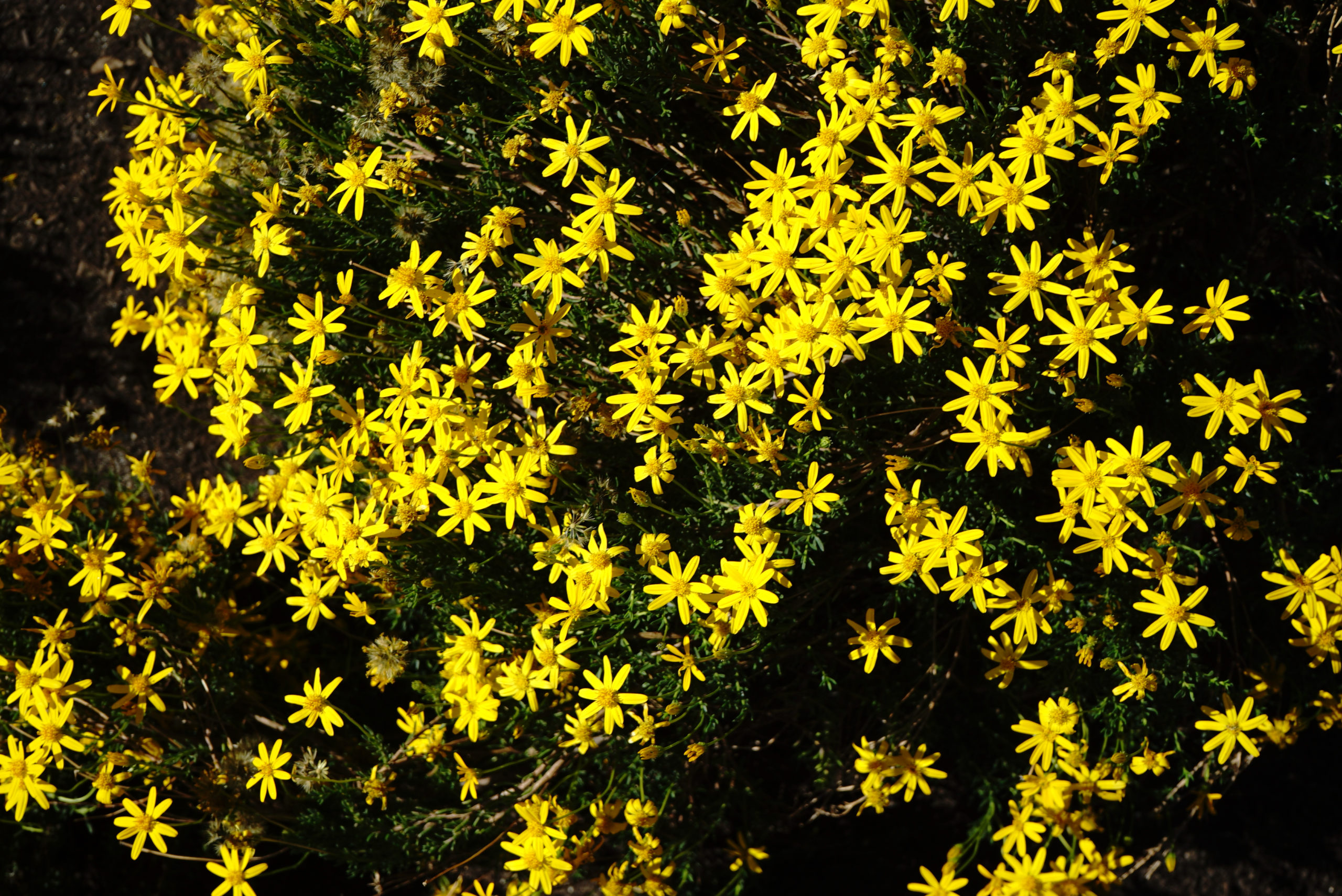
Euryops Daisy, Sunnylands Center and Gardens, Rancho Mirage, California 71 via Instagram

Euryops Daisy, Sunnylands Center and Gardens, Rancho Mirage, California 71 via Instagram

Follow Me On Instagram

From my Instagram Feed


An Amazing Indoor Garden Space

I can’t find a primary source for this photo, but it is an amazing example of an indoor garden space.

An Amazing Indoor Garden Space

h/t Emila Solis on Pinterest

Terrain

Find more books on Bookshop.com


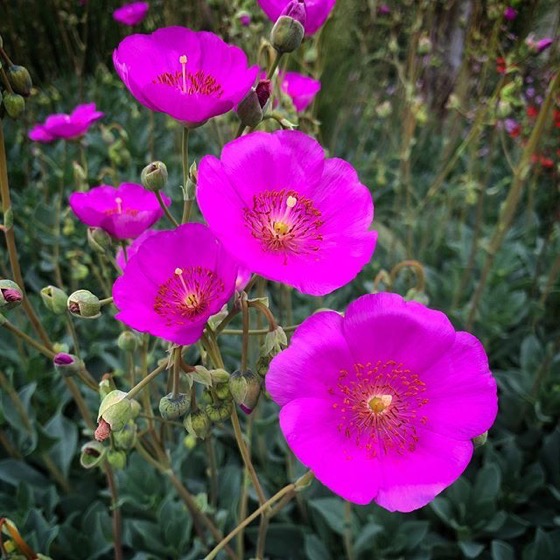
Flowering Now: Calandrinia(?) via Instagram – April 16, 2019

What is your favorite flower color? Leave a comment and share!

Flowering Now: Calandrinia(?) via Instagram - April 16, 2019

Flowering Now: Calandrinia(?)

Spotted in a neighbor’s garden. I am not quite sure of the ID as there have been many new Mediterranean plants in the recently planted drought-tolerant gardens. 

These “shouts” of color certainly catch the eye as you are walking by…or even driving. 


Don’t miss a single post!

Sign up for the Gardener’s Notebook Mailing List


* A portion of each sale from Amazon.com directly supports our blogs
** Many of these books may be available from your local library. Check it out!
† Available from the LA Public Library

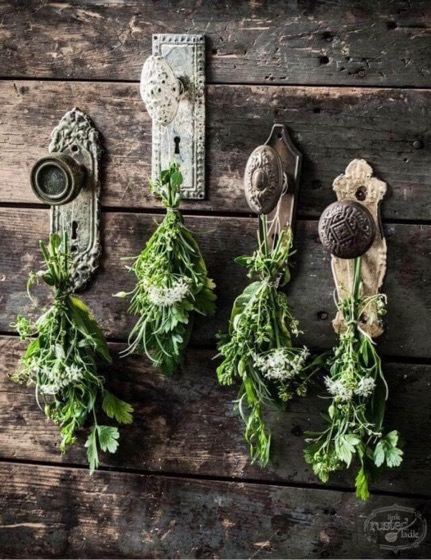
Garden Decor: Antique Doorknob Flower and Herb Drying Display

I love these antique doorknobs and doorplates repurposed in this way. I think you could use it in any number of ways depending on how sturdily you mounted it to the wall.
 
This photo has become disassociated from its original source, though. If you have any idea where it came from, let me know. — Douglas
 
Garden Decor: Antique Doorknob Flower and Herb Drying Display
 

See more garden decor on Amazon.com


An interesting link found among my daily reading

My Most Popular Garden Pin – November 30, 2016

Here is my most popular garden Pin on Pinterest today

Interesting Plant: Begonia Rex (Painted-leaf begonia)

Begonia Rex (Painted-leaf begonia)

Begonia Rex has an amazing variety of colors, shapes, variegation and more. I am always looking for shade plants and begonia are always a great source of lovely color and variety for those places that simply don’t have enough sun for more showy, flowering plants.

This Begonia Rex Google Image Search will give you a good overview of the variety available.

Looking for more? There is a host of links to Begonia Rex on Pinterest, too.

begona-rex

Photo: Plants Are The Strangest People

What are your thoughts on this Interesting Plant? Drop a note in the comments!

Begonia is a genus of perennial flowering plants in the family Begoniaceae. The genus contains 1,795 different plant species. The Begonias are native to moist subtropical and tropical climates. Some species are commonly grown indoors as ornamental houseplants in cooler climates. In cooler climates some species are cultivated outside in summertime for their bright colourful flowers, which have sepalsbut no petals.

With 1,795 species, Begonia is the fifth-largest angiosperm genus.[1][2] The species are terrestrial (sometimes epiphytic) herbs or undershrubs, and occur in subtropical and tropical moist climates, in South and Central America, Africa, and southern Asia. Terrestrial species in the wild are commonly upright-stemmed, rhizomatous, or tuberous. The plants are monoecious, with unisexual male and female flowers occurring separately on the same plant; the male contains numerous stamens, and the female has a large inferior ovary and two to four branched or twisted stigmas. In most species, the fruit is a winged capsule containing numerous minute seeds, although baccate fruits are also known. The leaves, which are often large and variously marked or variegated, are usually asymmetric (unequal-sided).  — Wikipedia

More information on Begonia Rex:

 
Books/Plants

 * A portion of each sale from Amazon.com directly supports our blogs
** Many of these books may be available from your local library. Check it out! 
 
Ls 13inch 220x200 bg f8f8f8 pad 220x200 ffffff 2u1Tb 220x200 flat pad 220x200 ffffff 2u1 1
Sn 220x200 bg ffffff pad 220x200 ffffff u1Ctr x1000 front black c 190 225 315 294 bg ffffff 4u1
 
Previously in the Interesting Plant series: 

Interesting Plant is a series from A Gardener’s Notebook blog and podcast that highlights the most interesting plants I find in my Internet and real-world travels — Douglas

Leonotis leonurus

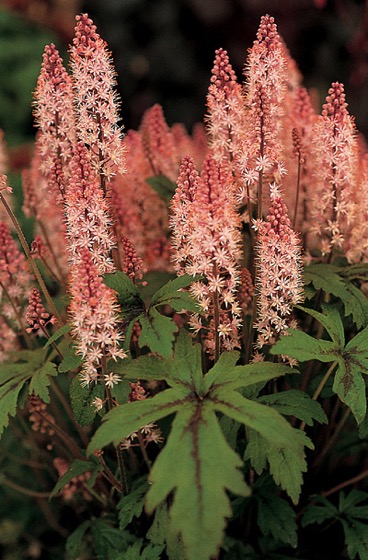
Interesting Plant: Tiarella ‘Pink Skyrocket’

Tiarella ‘Pink Skyrocket’

Another Pinterest find from Kelhm’s Song Sparrow Farm and Nursery. There are a wide variety of Tiarella’s available from a variety of vendors, it seems.

Interesting Plant: Tiarella 'Pink Skyrocket'

What are your thoughts on this Interesting Plant? Drop a note in the comments!

Discovered via Pinterest

Tiarella trifoliata, commonly called threeleaf foamflower,[1] laceflower,[2] or sugar-scoop,[2] is a dicot in the family Saxifragaceae.

It is native to the low to moderate elevation moist forests of western North America, from northern California to Montana and western Canada.

Tiarella trifoliata is a perennial herb that grows in the late spring.

The flowers are bell-shaped, white, solitary from an elongate, leafless panicle. The calyx lobes are 1.5–2.5 mm and petals are 3–4 mm. Basal leaves are 15–80 mm long and up to 120 mm wide, trifoliate or palmately 3- to 5-lobed. Cauline leaves are infrequent and much smaller.[1] — Wikipedia

  More information on  Tiarella and Tiarella ‘Pink Skyrocket’):


Books


 * A portion of each sale from Amazon.com directly supports our blogs
** Many of these books may be available from your local library. Check it out! 

Previously in the Interesting Plant series: 

Interesting Plant is a series from A Gardener’s Notebook blog and podcast that highlights the most interesting plants I find in my Internet and real-world travels — Douglas

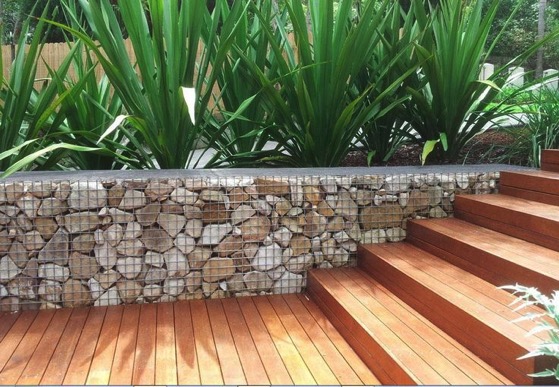
Garden Decor: Gabion Walls

Gabion Walls

Gabion walls are an interesting style that can be adapted in many different ways. They are basically wire baskets filled with whatever stone you wish. They can be basic and functional or quite decorative, as well as large, small and everything in-between.

Gabion 1

Discovered via Pinterest User Linda Hedderig

 Gabion 2

More information on gabion walls from Wikipedia…

gabion (from Italian gabbione meaning “big cage”; from Italian gabbia and Latin cavea meaning “cage”) is a cagecylinder, or box filled with rocks, concrete, or sometimes sand and soil for use in civil engineering, road building, military applications and landscaping.

For erosion control, caged riprap is used. For dams or in foundation construction, cylindrical metal structures are used. In a military context, earth- or sand-filled gabions are used to protect artillery crews from enemy fire.

Leonardo da Vinci designed a type of gabion called a Corbeille Leonard (“Leonard[o] basket”) for the foundations of the San Marco Castle in Milan.[1]

The most common civil engineering use of gabions was refined and patented by Gaetano Maccaferri in the late 1800s in Sacerno, Emilia Romagna and used to stabilize shorelines, stream banks or slopes against erosion. Other uses include retaining walls, temporary flood wallssilt filtration from runoff, for small or temporary/permanent dams, river training, or channel lining.[2] They may be used to direct the force of a flow of flood water around a vulnerable structure.

Gabions are also used as fish screens on small streams. Gabion stepped weirs are commonly used for river training and flood control; the stepped design enhances the rate of energy dissipation in the channel, and it is particularly well-suited to the construction of gabion stepped weirs.[3]

A gabion wall is a retaining wall made of stacked stone-filled gabions tied together with wire. Gabion walls are usually battered (angled back towards the slope), or stepped back with the slope, rather than stacked vertically.

Gabion baskets have some advantages over loose riprap because of their modularity and ability to be stacked in various shapes; they are also resistant to being washed away by moving water. Gabions also have advantages over more rigid structures, because they can conform to subsidence, dissipate energy from flowing water, and drain freely. Their strength and effectiveness may increase with time in some cases, as silt and vegetation fill the interstitial voids and reinforce the structure. — Wikipedia

More information on gabion walls:

Books on Gabion Walls from Amazon.com:

* A portion of each sale from Amazon.com directly supports our blogs
** Many of these books may be available from your local library. Check it out! 

Previously in Garden Decor:

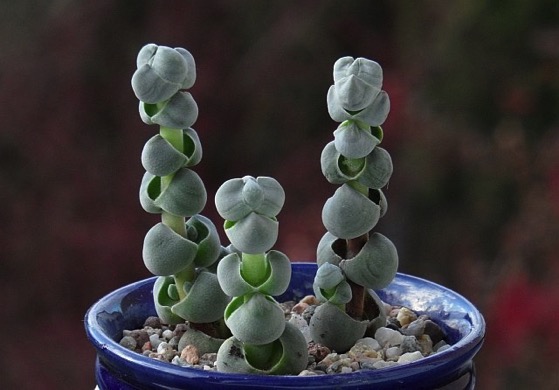
Interesting Plant: Crassula plegmatoides

Crassula plegmatoides

Crassula is an amazingly diverse genus and this Crassula plegmatoides is especially cook looking. This plant seems to be synonymous with Crassula arta, if my research is accurate, and more information can be found under that name. The Pinterest link was originally linked with the “arta” name.

Crassula arta

 Discovered via Pinterest User Willemijn Derks

Crassula is a large genus of succulent plants containing many species, including the popular jade plant, Crassula ovata. They are native to many parts of the globe, but cultivated varieties originate almost exclusively from species from the Eastern Cape of South Africa.

Crassulas are usually propagated by stem or leaf cuttings. Most cultivated forms will tolerate some small degree of frost, but extremes of cold or heat will cause them to lose foliage and die. — Wikipedia

  More information on Crassula plegmatoides:

Books


 * A portion of each sale from Amazon.com directly supports our blogs
** Many of these books may be available from your local library. Check it out! 

Previously in the Interesting Plant series: 

Interesting Plant is a series from A Gardener’s Notebook blog and podcast that highlights the most interesting plants I find in my Internet and real-world travels — Douglas

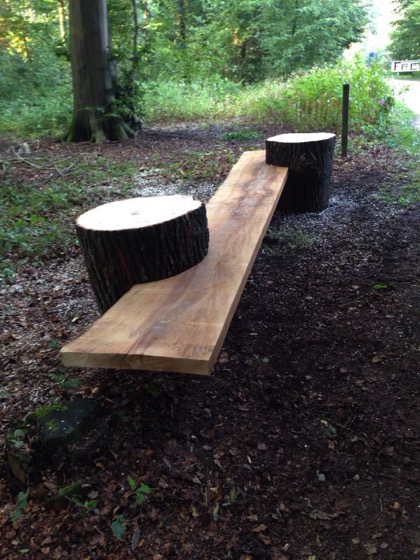
Garden Decor: Stump and Plank Garden Bench

Stump plank seating

I discovered this stump and plank garden bench idea on Pinterest from HomeEsthetics.net and it linked over to the complete article, 27 Extremely Useful and Creative DIY Furniture Projects That Will Discreetly Transform Your Decor. There are a bunch of good ideas in that article, but this one caught my eye. I wonder if sitting on the ends might be a bit precarious and cause the seating to twist, but sitting in the middle should work fine. I might try something on a smaller scale here in the garden to see how well it works.

Previously in Garden Decor: