Agave, Sherman Library and Gardens, Corona del Mar, California [Photography]

The image features a close-up view of a vibrant green and yellow agave plant, positioned in front of a textured, light-colored stone wall. The agave's leaves radiate outwards in a starburst pattern, displaying a striking color gradient from pale yellow at the tips to a deeper, rich green closer to the center. Darker foliage is visible to the left of the main plant, adding depth to the composition. The ground surrounding the agave is covered in small stones and appears to be a garden bed. The overall lighting creates strong contrast, highlighting the plant’s texture and the wall’s surface.</p>

<p>Provided by @altbot, generated privately and locally using Gemma3:27b

Find more of my photos on PixelFed


Specimen Shade Garden, Sherman Library and Gardens, Corona del Mar, California [Photography]

 A dense, indoor garden scene is captured from a low angle, showcasing a variety of lush, green plants. Tall, slender tree trunks rise vertically throughout the image, with their upper portions obscured by a wooden lattice structure overhead. In the foreground, a collection of broad-leafed plants in shades of green and reddish-purple creates a textured carpet of foliage. A pale, stone sculpture of an elongated, curved form stands prominently amongst the plants. A small, rectangular sign is visible near the sculpture, reading “Tillandsia”.</p>

<p>Provided by @altbot, generated privately and locally using Gemma3:27b

Find more of my photos on PixelFed


ShadeMap – Simulate sun shadows for any time and place on Earth [Shared]

ShadeMap - Simulate sun shadows for any time and place on Earth [Shared]

See the shade produced by mountains or buildings at any location and any time of year. Great for garden planning!

ShadeMap – Simulate sun shadows for any time and place on Earth

Best woodland plants for gardens: 12 types for shady spots via GardeningEtc [Shared]

Best woodland plants for gardens: 12 types for shady spots | GardeningEtc

Best woodland plants for gardens: 12 types for shady spots via GardeningEtc [Shared]

The best woodland plants often come into their own in spring. Light falls through branches that haven’t yet come into leaf, bathing the plants below in a golden glow. The show begins with snowdrops and aconites and transforms week by week, with primroses, forget-me-nots and wood anemones blooming in a non-stop carpet of colour.

Read Best woodland plants for gardens: 12 types for shady spots | GardeningEtc

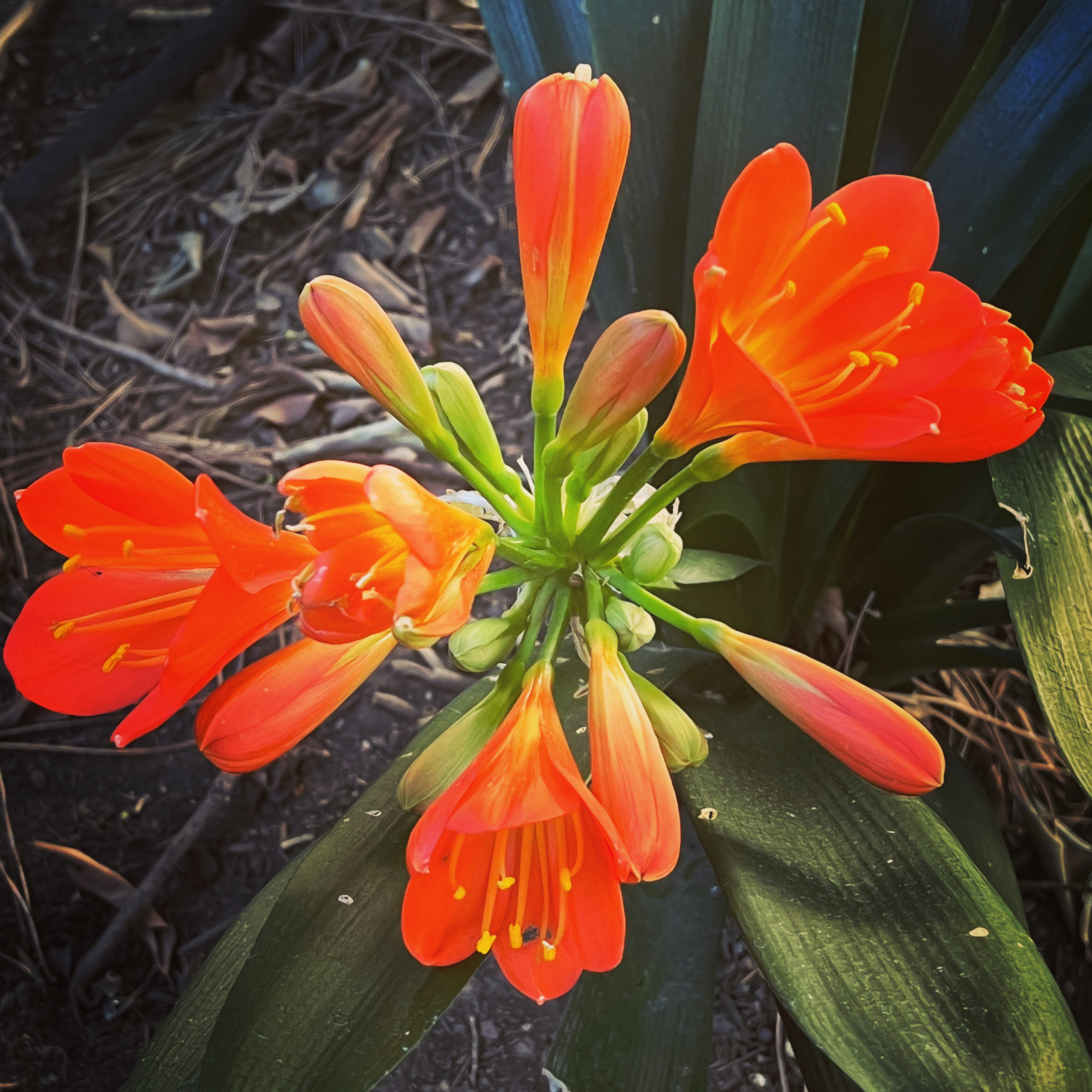
Flowering Now: Clivia In The Back Garden via Instagram [Photography]

Flowering Now: Clivia In The Back Garden via Instagram [Photography]

Follow Me On Instagram

From my Instagram Feed


Making a Garden in the Woods via FineGardening

Today we’re visiting Deborah McQuiston’s garden and sharing some photos she took in the beginning of October.

I live in northeastern Pennsylvania, in the Pocono Mountains, Zone 5b.

Our house was built in 2012, so I started with nothing: half an acre, nothing in the middle, surrounded by more than 200 deciduous trees. Challenges are the ever present deer, our short growing season in Zone 5, and gardening on a slope in the rear of the house.

It’s still a work in progress: hardscaping is done by landscaping professionals, but all 400+ perennials and shrubs have been planted by this 60-something!

Read Making a Garden in the Woods – FineGardening via FineGardening


The New Shade Garden: Creating a Lush Oasis in the Age of Climate Chang

Find more books on Bookshop and Help Indie Book Stores!


An interesting link found among my daily reading

Gardening 101: Coleus via Gardenista

Coleus: Plectranthus scutellarioides
 
Is coleus a plant you have to learn to love? Garden trends ebb and flow—and bright, dramatically colored foliage can be an acquired taste. I used to dismiss these tropical plants because I thought their brightly tinged leaves screamed gaudiness and were unbelievably hard to mix with other flowers. No longer. Now I think of them as plant gems that can add a burst of dramatic color; whenever I spot them I snap them up for my clients’ container plantings.
Read Gardening 101: Coleus via Gardenista


* A portion of each sale from Amazon.com directly supports our blogs
** Many of these books may be available from your local library. Check it out!
† Available from the LA Public Library


An interesting link found among my daily reading

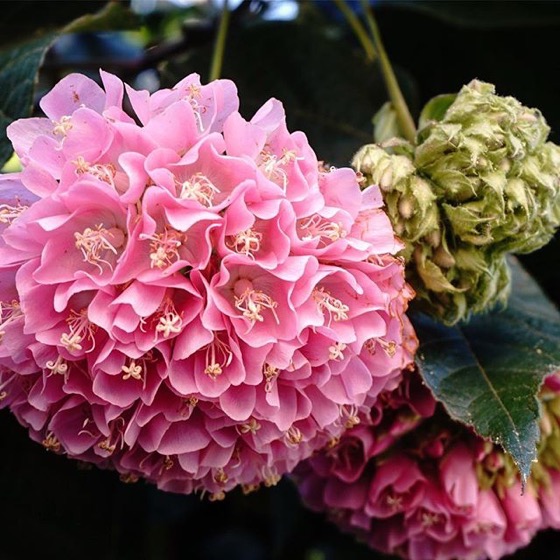
Rhododendron, Huntington Library, Art Collection, and Botanic Garden, San Marino, California

What interesting flowers and plants do you find in your neighborhood? Share your thoughts in the comments!

Rhododendron, Huntington Library, Art Collection, and Botanic Garden, San Marino, California

Rhododendron, Huntington Library, Art Collection, and Botanic Garden, San Marino, California

I hadn’t been to the Huntington in a long time, but with our Italian family in time it was a “must see.” Danielle and Marcello had visited 16 years ago on their honeymoon and knew that her mother, Francesca would love to see it, too. We walked — and photographed — a large majority of the gardens and viewed some amazing documents on display in the Library.

Like many past visits, surprises lurked around every corner. These rhododendrons sprung into view as we were navigating a back way to the new Chinese Garden. Such bright flowers in the shade always “pop” so much and — as you can imagine — a photograph was required to remember them and share them here and on A Gardener’s Notebook. Had I not decided this particular route and turned this particular corner at this particular time, I might have missed them entirely. Serendipity always plays a great part in travel and photography. 

Instagram  and Follow

Join me on Douglas E. Welch Photography on Facebook

Learn more about rhododendrons with these books

* A portion of each sale from Amazon.com directly supports our blogs
** Many of these books may be available from your local library. Check it out!
† Available from the LA Public Library

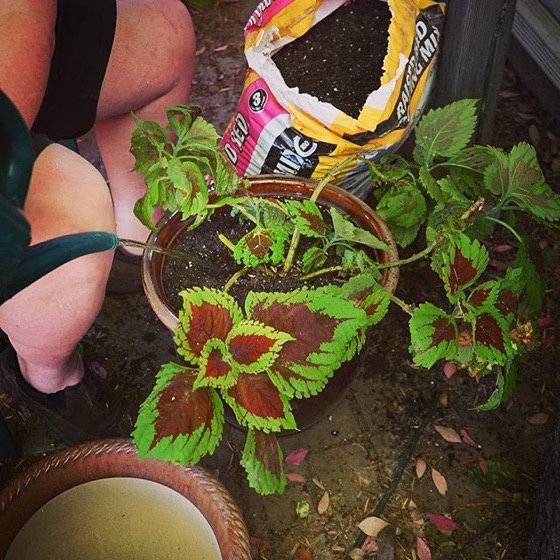
Transplanting Coleus via My Instagram

Agn coleus 2

Transplanting Coleus

Working in the garden over the weekend. 

Join the Gardener’s Notebook Mailing List

Instagram and Follow

Learn more about coleus

* A portion of each sale from Amazon.com directly supports our blogs
** Many of these books may be available from your local library. Check it out!
† Available from the LA Public Library

A Gardener’s Notebook: The Guilty Gardener  – 1 in a series

A Gardener’s Notebook: The Guilty Gardener  – 1 in a series
Douglas E. Welch

It has taken me a long time to write the piece. Frankly, I am embarrassed and don’t really want to share that embarrassment publically. Still, I think it is important to do so and perhaps, just maybe, you can help me get back on the right track…in the garden.

In the past, I have written columns about being a “lazy gardener” and how my garden survives on benign neglect. Due to a few health issues over the last couple of years, though, my neglect has become none too benign and laziness has turned to guilt. I look out my back door, or into the front garden as I drive away and feel deeply guilty that it looks so bad. I am so guilty, in fact, that this is yet another way that I feel even more guilty each time I do.

Click for larger versions

I often say that it is much easier to enjoy someone else’s garden as you aren’t constantly noticing all the unkempt plants, the un-done projects and the improvements you have always meant to do. There is no guilt to be found in someone else’s garden. It is pure joy.

That said, I am hoping to break out of the gardening guilt over the next few months and I am enlisting your aid in the process. Since I seem unable to meet my own self-imposed deadline, perhaps with some urging and help from you I can make some progress in the garden. What do you say? Are you up for the challenge?

A few projects to address

One of the first projects and probably the largest and most troublesome is all the deferred maintenance that has piled up. With all the large trees on this fairly small property, the leaf litter is overwhelming. I used to be able to keep on top of it a little better, but we need some dramatic action, I think. One possibility is bringing in a small crew to clean out the entire garden in a day or two and give us a much needed “reset” from which to grow.  I have a chipper, although it has remained unused for some time, and would like to use the shredded leaves to mulch around the garden, but I haven’t been able to make the effort yet.

If you have a lot of leaf litter, how best do you deal with it?

Another project, among many, is to find some ground cover that can thrive under a canopy of trees. This dry shade area of the garden, while feeling wonderfully like a tiny bit of woodland here in urban Los Angeles, needs something to make it greener and more inviting. I have read more books on shade plants than I care to admit, but I haven’t seemed to find anything that has a reasonable chance of success and that I can locate locally. There are a few natives that might meet my needs, but this probably requires a trip to San Diego County to find a source. Still, if you could offer a few recommendations, it could be worth the trip.

Guilty garden 3

Dry Share Area of the Garden Looking Souttheast

Guilty garden 1

Dry Share Area of the Garden Looking Northeast

What do you use as ground cover in dry shade areas underneath mature trees?

Now my guilty complaining doesn’t mean we haven’t had some successes. The Brunfelsia I planted along the wall in this dry shade area have both done well and even bloomed this year. We also rescued a host of small plants (society garlic, spider plants, agapanthus) from a new neighbor’s front yard and these have helped to green up another area in the back garden.

Brunfelsia

Brunfelsia (Yesterday, Today and Tomorrow)

Rescued Plants

Rescued plants

In the front garden, our 3-year-old pomegranate tree is doing well, although one item on my to-do list is to prune this into more a shrub than a tree to allow for easier harvesting. Our neighbor has a lovely, much older pomegranate tree, but its size makes it difficult to get the fruit at the very top. Beneath the pomegranate is a native buckwheat that is doing amazingly well. We had to give it a good trim when we installed the wine bottle edging around this bed, but it is already growing back steadily.

There is is, then. Lots of challenges and a few successes. I’ll be highlighting more guilty secrets in future columns. I hope you can help me with some suggestions and, perhaps, some friendly nudges to get back out into the garden, guilty feeling or no, and make it, once again, a place I love.