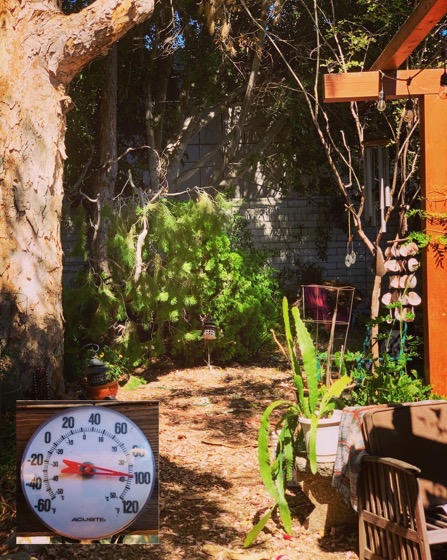
A whole lotta nope in the garden today…at least until the sun goes down a bit.
From my Instagram Feed
A whole lotta nope in the garden today…at least until the sun goes down a bit.
From my Instagram Feed
Part of a series from A Gardener’s Notebook
In this episode:
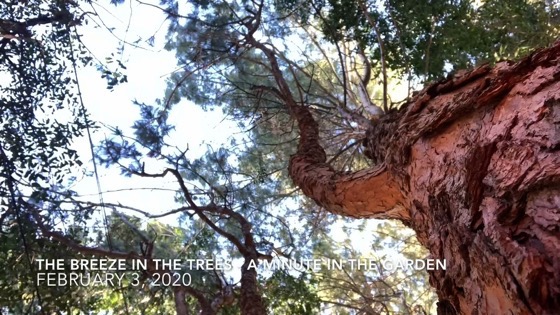
Blustery (and somewhat destructive) winds toss the pine trees in the garden.
Help Support A Gardener’ Notebook!
Podcast: Play in new window | Download
Subscribe: RSS
Like Dazzling Dahlias on Facebook
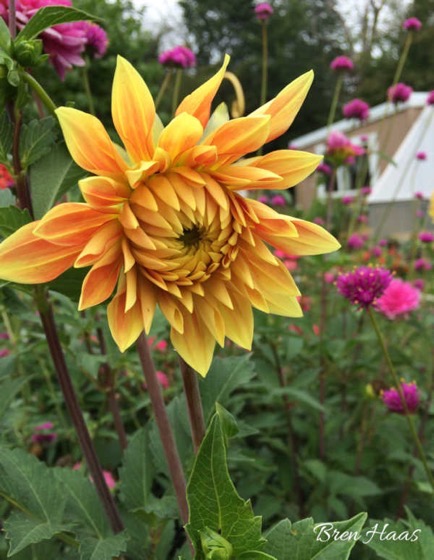
Dahlias are a beautiful companion plant for the rose shrub. In this post, we discuss roses vs. dahlias in the autumn home garden.
In The Autumn Home Garden
Chances are if you grew up in the Midwest like I did your grandmother grew dahlias with her roses in the home garden. Dahlias are a beautiful companion plant for the rose shrub. Both roses and dahlias obvious require a little maintenance. If you live and grow in the U.S. Department of Agriculture plant hardiness zones 8-11 the dahlia grows as a perennial. My garden is in zone 5b and the dahlia tubers must be dug up for winter storage. The roses get a nice fresh layer of mulch, remove all the dead leaves and pruned back to about 2 feet tall by October 1. Removing all the dead foliage on the roses will help prevent fungus and bad bugs from moving in.
Read Roses VS. Dahlias in The Autumn Home Garden via Creative Living with Bren Haas
* A portion of each sale from Amazon.com directly supports our blogs
** Many of these books may be available from your local library. Check it out!
An interesting link found among my daily reading
Even cool, grey, and slightly rainy, days, fires are already starting to crop up around Southern California. Check out these tips to make your home even more fire safe. — Douglas
How to help fireproof your home before the next big wildfire
As Los Angeles homeowners prepare to trim grass, weeds and trees for the annual brush clearance inspections in May and June, the L.A. County Fire Department’s Forestry Division advises moving beyond standard procedures when it comes to reducing wildfire risk.“The state is trying to pull away from the term ‘brush clearance’ and change the mind-set,” says Assistant Chief J. Lopez. “Clearing brush is going to help, but that puts the blame on brush only.”
So what should homeowners do? “Harden your homes,” Lopez says. “The best chance for a home to survive is by protecting the first 30 feet surrounding the home. We know it works.”
Read How to help fireproof your home before the next big wildfire via The Los Angeles Times
* A portion of each sale from Amazon.com directly supports our blogs
** Many of these books may be available from your local library. Check it out!
A few weeks ago, here in the San Fernando Valley, we set an all-time high temperature of 117º. While we are used to a few days of warm temperatures each Summer, this is by far the hottest and longest patch I, and most of the California Natives, have ever experienced. As I walked around the neighborhood over the next several weeks I began spotting some major shrub and tree damage from this intensive heat. In my 30+ years in California, I have only ever seen damage like this after several nights of freezing temperatures (which do happen quite regularly here in the Valley).
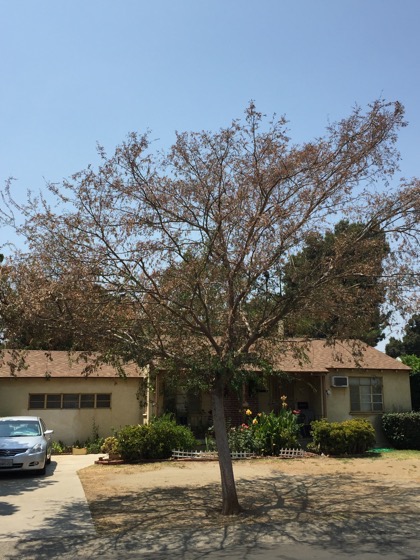
One of the first things I spotted was our neighbor’s young Chinese elm. These are popular street trees here in the Valley and are quite hardy. I have a 40+-year-old specimen in my own garden. This tree, though, without any surrounding shade, standing in the middle of an open lawn seemed to have taken a dramatic hit.

I might be a bit hard to see in this picture, but the entire crown is brown although there are green leaves still seen near the top of the trunk. I am guessing the rest of the tree-shaded this portion just enough to protect it.

In this closeup, you can see the remaining green leaves against the dead, brown leaves of the upper story.
Next, and probably most dramatically hit was our neighbor’s apple trees. These trees are designed for our warmer climate and seem to grow and fruit quite well, but the heat was simply too much for one of them. There are two trees, one to the north and one to south a small distance apart. For whatever the reason, the Northern tree was nearly destroyed, while the Southern tree only showed some areas of scorch.

From a distance, it appears that the entire tree is dead, but again, like the Elm tree across the street, there is still some life remaining below.

Even though this tree had flowered normally in the Spring, it seemed to be attempting to flower again, perhaps thinking it was about to expire. I had planned on helping the neighbor prune and maintain these trees in the future, as they don’t really like the apples and don’t pay them much attention. Now it looks like I will need to spend some timing doing some removal of the dead limbs and seeing what is salvageable. I am guessing this tree will survive, but it will take several years before it is back to the size it once was.
Finally, I have 2 redwoods on my property and there is a street nearby that is lined with them — probably a feature of the original developers planned. Almost universally, the redwoods have scorched those sides that received the most sun and, most especially, the strong afternoon sun on the hottest days of this heat wave. The redwood in my front garden looked fine until I was walking home from the library one day. It was only when I saw it while approaching from the north that I noticed the extensive scorching of the leaves. The back garden redwood was less scorched probably as it is partially shaded by surrounding trees and didn’t receive the full dose of sun and heat. The nearby street that is lined with redwoods looked even worse. Those trees are older and taller than mine so they received almost no shade and were scorched from the top nearly the bottom on their northeastern sides.

Redwoods are a northern, coastal, tree. They will never grow to the gigantic size of their northern cousins, but they normally do quite well here in Southern California. High temperatures like this, though, could cause more than a few of them to die over the next couple of months, especially if we do not receive a typical amount of rain in the Winter.
The saddest thing is there is not much we can do to protect these trees in the future. We can give them extra watering, placed deep among the roots to lessen the stress, but if climate change continues at this current pace our San Fernando Valley gardens might come to more resemble those in the true desert areas of California such as Palm Springs.
Learn more about scorch, sunburn and heat dress wi these articles
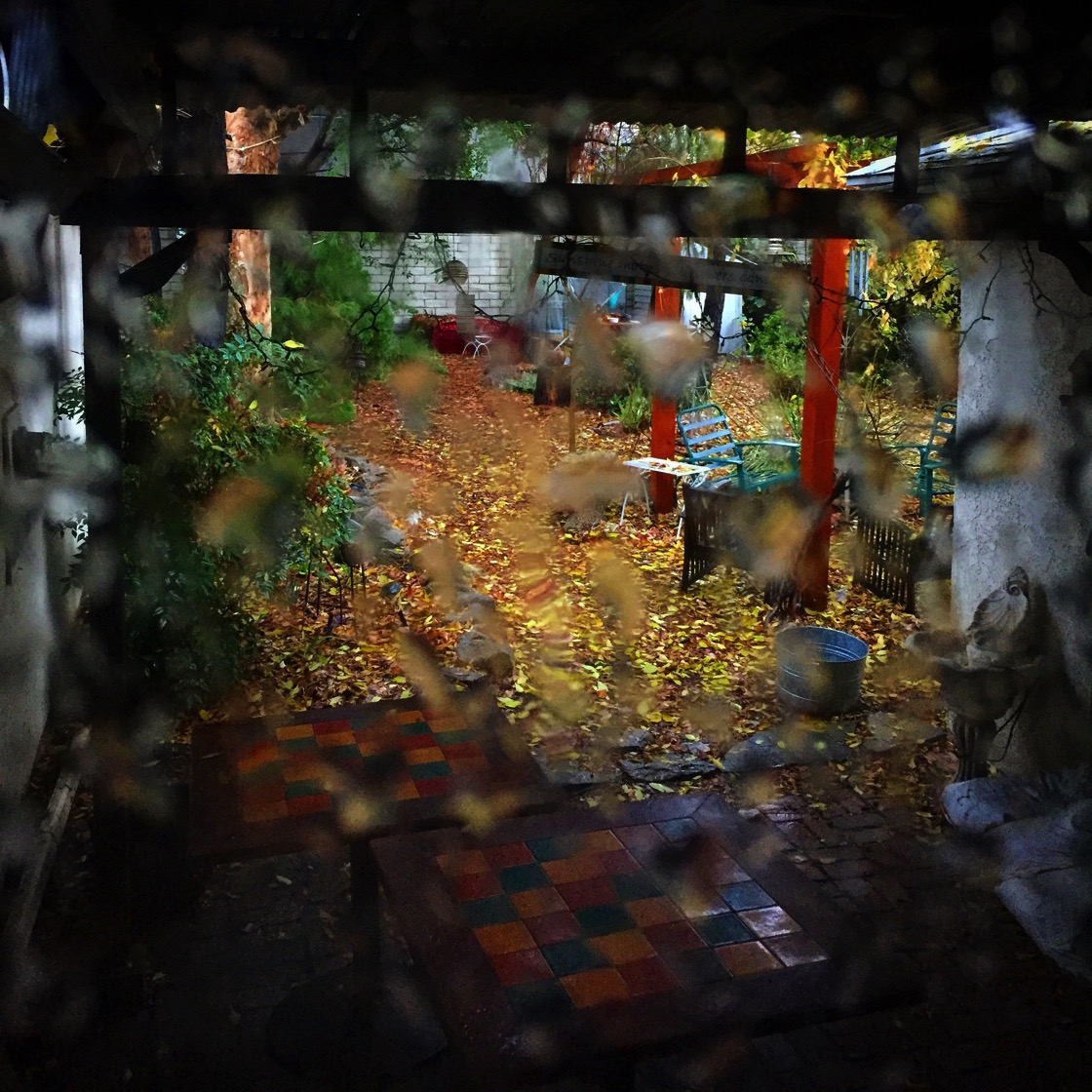
#rain #la #losangeles #nature #outdoors #larain #wet #garden #window #home #house
Follow A Gardener’s Notebook on Facebook
* A portion of each sale from Amazon.com directly supports our blogs
** Many of these books may be available from your local library. Check it out!
A Minute in the Garden: A series from A Gardener’s Notebook
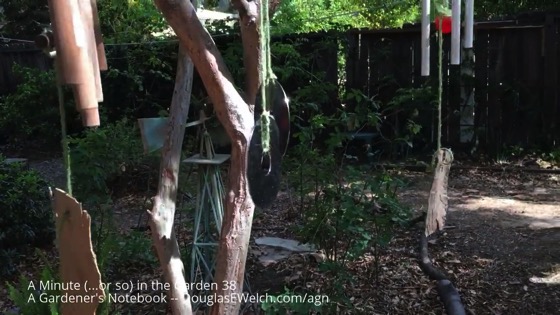
Wind chimes in the back garden on a breezy San Fernando Valley Day
See all the videos in “A minute in the garden” series in this YouTube playlist
Buy my photography on a variety of products directly from RedBubble
Help Support A Gardener’ Notebook!
Podcast: Play in new window | Download
Subscribe: RSS
A Minute in the Garden: A series from A Gardener’s Notebook
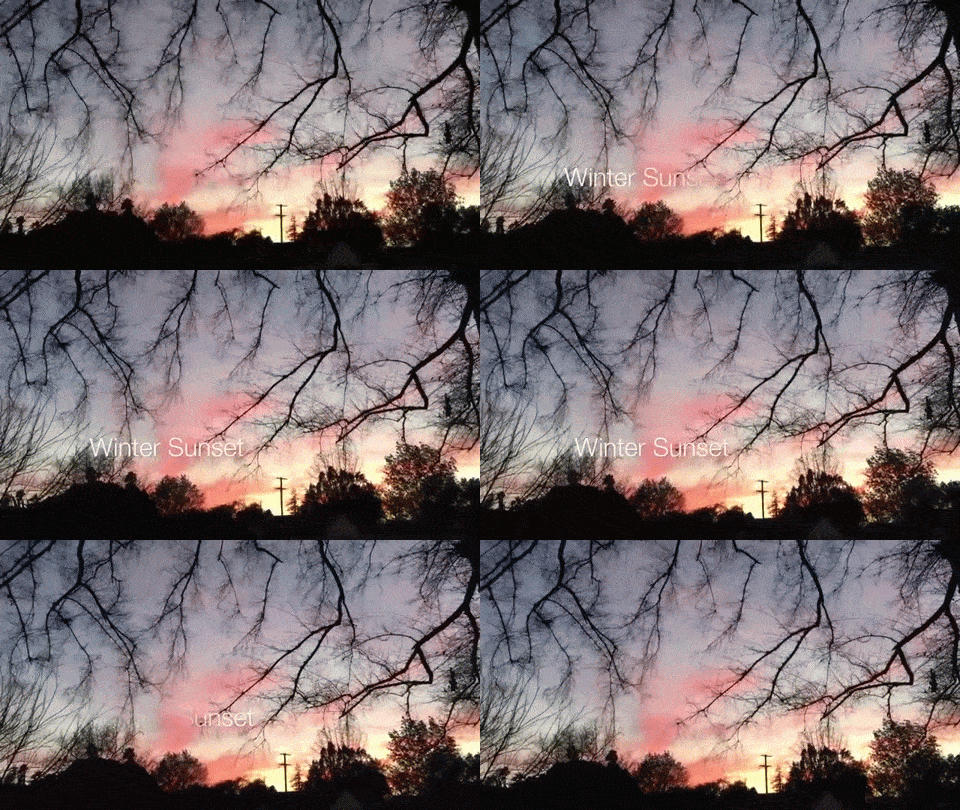
The view from the porch on this windy, Winter, evening
See all the videos in “A minute in the garden” series in this YouTube playlist
Buy this photo (and more) on a variety of products directly from RedBubble
Help Support A Gardener’ Notebook!
Podcast: Play in new window | Download
Subscribe: RSS
A Minute in the Garden: A series from A Gardener’s Notebook
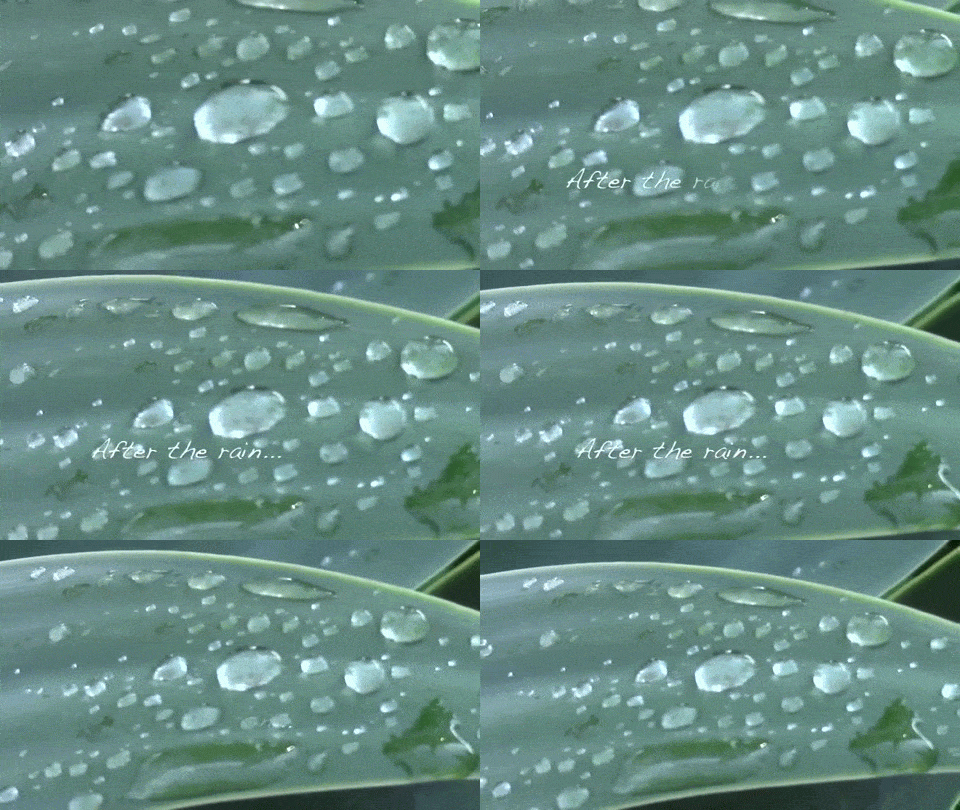
The next in a series of garden minutes
See all the videos in “A minute in the garden” series in this YouTube playlist
Buy my garden photos on a variety of products directly from RedBubble
Help Support A Gardener’ Notebook!
Podcast: Play in new window | Download
Subscribe: RSS