Fall Is Calling: What to Do in Your October Garden via Houzz
“Noted” items are particularly good finds from my daily reading which I share via all my social media accounts.
Fall Is Calling: What to Do in Your October Garden via Houzz
“Noted” items are particularly good finds from my daily reading which I share via all my social media accounts.
My new iPhone 6 lets us “see differently” Watering our garden at 120 frames per second.
Check out my collection of gardening essays, “From A Gardener’s Notebook” now available as a Kindle eBook. (You don’t need a Kindle to read it, though. Read it on your PC, Link: http://j.mp/fagnbook
Watch all past episodes of “In the garden…” in this YouTube Playlist
Music: “Numinous Shine” by Kevin MacLeod (http://incompetech.com) under Creative Commons License
Please Like this video and/or subscribe to my channel on YouTube.
Your likes and subscriptions directly reflect how many other viewers are suggested this video.
Subscribe to my YouTube Channel
“In the garden…” is a series for A Gardener’s Notebook highlighting what is happening in my garden, my friend’s gardens and California gardens throughout the seasons.
Podcast: Play in new window | Download
Subscribe: RSS
Discovered via Pinterest User Betty Hawthorne
Valued for its dramatic foliage display of slender, iridescent bronze leaves with an elegant sweeping, trailing habit. A great filler to add cool-season interest to perennial borders or as a groundcover. Well suited for containers. — Monrovia
Carex flagellifera Toffee Twist is a zone 7 hardy ornamental grass for sunny areas. Actually a sedge, this carex is grown for its beautiful toasted coppery brown foliage which turns a rich mahogany color by fall. Clump forming Carex cascades and twists in the most pleasing of ways, making this ideal for container gardening. — Great Garden Plants
This plant of mine, Carex flagellifera “Toffee Twist”, has been in my garden for five years and has been through 80°F+ heat and through -10°F freezing cold and several freezing rain storms and came out of it looking excellent. It is a very easy plant and one I would recommend if you are looking for an ornamental grass for your garden. “Toffee Twist” is between 12 and 18 inches in height and will spread from 18 to 24 inches in width. It remains within its boundaries. Definitely not an invasive plant. I have it planted in front of a dwarf rhododendron because its leaf color in summer is very much like the grass color. I have several grasses in my graden but this one always looks the best, there is little to do for it except feed and water. — Dave’s Garden Discussion
Previously in the Interesting Plant series:
Interesting Plant is a series from A Gardener’s Notebook blog and podcast that highlights the most interesting plants I find in my Internet and real-world travels — Douglas
How to Give Your Garden More Soul via Houzz
don’t want to start an argument, but that’s inevitable when you talk about the subject of soul, especially in music. Marvin Gaye, of course, had soul. Robin Thicke doesn’t. What’s a soulful garden? It’s expressive of you and your family. It’s authentic, sincere, personal, deeply felt, of the moment — I’m happy with a definition that says you know soul when you see it.
In a garden, blooming chrysanthemums bought from Safeway in March aren’t soulful. But a tree planted to celebrate the birth of a child is. Why add soulful touches to your garden? Mainly because that will help you and your family feel much more at home there.
“Noted” items are particularly good finds from my daily reading which I share via all my social media accounts.
How to Design a Calming Minimalist Garden via Houzz
“Noted” items are particularly good finds from my daily reading which I share via all my social media accounts.
Silk Floss Tree (Ceiba speciosa)
While their flowers are certainly beautiful, I have always found these trees to be quite alien and intimidating — especially with their thorny trunks. Silk floss trees are a relatively common street tree here in Los Angeles, blooming each Fall around this time.
Photo: Douglas E. Welch, A Gardener’s Notebook
The silk floss tree (Ceiba speciosa, formerly Chorisia speciosa), is a species of deciduous tree native to the tropical and subtropical forests of South America. It has a host of local common names, such as palo borracho (in Spanish literally “drunken stick”). It belongs to the same family as the baobab and the kapok. Another tree of the same genus, Ceiba chodatii, is often referred to by the same common names.
The natural habitat of the floss silk tree is the north-east of Argentina, east of Bolivia, Paraguay, Uruguay and southern Brazil. It is resistant to drought and moderate cold. It grows fast in spurts when water is abundant, and sometimes reaches more than 25 metres (82 ft) in height. Its trunk is bottle-shaped, generally bulging in its lower third, measuring up to 2 metres (7 ft) in girth. It is studded with thick conical prickles which serve to store water for dry times. In younger trees, the trunk is green due to its high chlorophyll content, which makes it capable of performing photosynthesis when leaves are absent; with age it turns to gray.[1] — Wikipedia
More information on Silk Floss Tree (Ceiba speciosa):
Previously in Flowering Now:
Free Online Gardening Lectures from the University of California via Root Simple
I just got back from a combined Master Gardener/Master Food Preserver conference put on by the University of California Department of Agriculture and Natural Resources (I became a Master Food Preserver back in 2012 thanks to a truly awesome training program put on by our local Extension Service and taught by Ernest Miller, a guest on episode 14 of our podcast).
“Noted” items are particularly good finds from my daily reading which I share via all my social media accounts.
Native CA Plants in a Hidden Garden – Pierce College Botanical Garden via Animalbytes
I had heard there was a native plant garden on the campus at Pierce College in the San Fernando Valley, but I had not been there. I’m doing a series on Hidden Gardens of Los Angeles on TheEarthMinute.com, so I went scouting for the garden at Pierce.
“Noted” items are particularly good finds from my daily reading which I share via all my social media accounts.
Great Design Plant: Paperbark Maple via Houzz
“Noted” items are particularly good finds from my daily reading which I share via all my social media accounts.
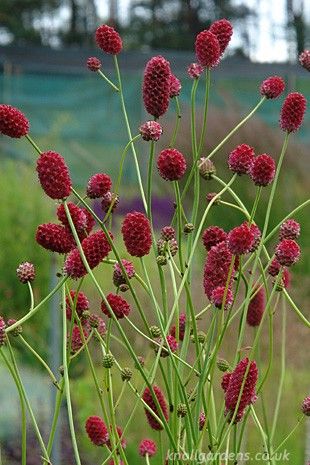
Discovered via Pinterest User By C’mai
Sanguisorba is a genus of flowering plants in the family Rosaceae native to the temperate regions of the Northern Hemisphere. The common name is burnet.
The plants are perennial herbs or small shrubs. The stems grow to 50-200 cm tall and have a cluster of basal leaves, with further leaves arranged alternately up the stem. The leaves are pinnate, 5-30 cm long, with 7-25 leaflets, the leaflets with a serrated margin. Young leaves grow from the crown in the center of the plant. The flowers are small, produced in dense clusters 5-20 mm long; each flower has four very small petals, white to red in color.
Burnets are cultivated as garden plants. Many cultivars have been bred, especially from S. officinalis. S. canadensis is grown for its white flowers on stems that well exceed a meter tall. The plants hybridize easily, producing new mixes.[3] S. obtusa is valued for its foliage of pink-edged, gray-green leaves.[4]
S. officinalis is used medicinally in Asia to treat gastrointestinal conditions and bleeding.[5] — Wikipedia.org
Previously in the Interesting Plant series:
Interesting Plant is a series from A Gardener’s Notebook blog and podcast that highlights the most interesting plants I find in my Internet and real-world travels — Douglas