Podcast: Play in new window | Download
Subscribe: RSS
*Redbubble has discounts when purchasing multiple items and also gives 10%-20% discounts on a regular basis. Check back often!
See More Products On These Sites
DouglasEWelch.com/shop/follow | Instagram | Twitter
See my entire catalog
Podcast: Play in new window | Download
Subscribe: RSS
![Daffodil Closeup via Instagram [Photography]](http://welchwrite.com/agn/wp-content/uploads/2022/02/daffoldil-closeup.jpg)
@douglaswelch Flowering Now: Daffodil Closeup#daffodil #floweringnow #flowers #closeup #droplets #nature #outdoors #garden #gardening ♬ Pure Imagination – Kathleen
From my Instagram Feed
Podcast: Play in new window | Download
Subscribe: RSS
Top 10 Best Flowers for Growing in Pots – Birds and Blooms
Even if you have a small garden, deck or patio, you can still grow beautiful flowers! We found the best flowers for pots.
Read Top 10 Best Flowers for Growing in Pots – Birds and Blooms
@douglaswelch Flowering Now: Lady Banks’ Rose Flowers Closeup #slomo #closeup #flowers #floweringnow #garden #gardening #nature #outdoors #yellow ♬ cottage – mt. fujitive
Podcast: Play in new window | Download
Subscribe: RSS
Top 10 Hummingbird Plants That Grow in Shade – Birds and Blooms
You can attract hummingbirds even in a spot with little sun. It’s easy, just plant these 10 hummingbird plants for shade.
Read Top 10 Hummingbird Plants That Grow in Shade – Birds and Blooms
Self Watering Pots
Wet Pot is a self-watering terracotta pot that helps your plants take care of themselves! Available in three sizes, the pots work with a two-part system that allows your plants to water themselves as needed. Water supply is regulated by different co-operating factors. The technique is called Capillary Attraction. Your plant lives in the absorbent terracotta pot which in turn floats inside a perfectly sized glass cylinder. Just add water as needed to the glass exterior and watch your houseplants reach their full potential, with minimum worry on your part.
![Poinsettia in the Container Garden via Instagram [Phtotography]](http://welchwrite.com/agn/wp-content/uploads/2022/02/poinsettia.jpg)
We have several, large, poinsettias carried over from previous holidays.
@douglaswelch Flowering Now: Poinsettia in the Container Garden#poinsettia #flowers #brachs #plants #nature #outdoors #garden #gardening #containergarden ♬ Sunset Lover – Petit Biscuit
From my Instagram Feed
Podcast: Play in new window | Download
Subscribe: RSS
“There is one book that I would rather have produced than all my novels,” Willa Cather rued in her most candid interview about creativity. That book was Rocky Mountain Flowers: An Illustrated Guide For Plant-Lovers and Plant-Users by the pioneering plant ecologist and botanical artist Edith Clements (1874–1971).
Together with her husband, the influential botanist Frederic Clements, she pioneered the science of plant ecology, lending empirical substantiation to her contemporary John Muir’s poetic observation that “when we try to pick out anything by itself, we find it hitched to everything else in the universe.” In her 1960 memoir Adventures in Ecology: Half a Million Miles: From Mud to Macadam , penned shortly before Rachel Carson awakened the modern ecological conscience with Silent Spring and half a century before the climate calamity we are now living, Edith Clements prophesied:
“There seems little doubt that the application of the principles of ecology to human affairs, whether personal, national or world-wide, would go far in solving the problems that beset us.”
‘Cyborg soil’ reveals the secret microbial metropolis beneath our feet
Dig a teaspoon into your nearest clump of soil, and what you’ll emerge with will contain more microorganisms than there are people on Earth. We know this from lab studies that analyse samples of earth scooped from the microbial wild to determine which forms of microscopic life exist in the world beneath our feet.
The problem is, such studies can’t actually tell us how this subterranean kingdom of fungi, flagellates and amoebae operates in the ground. Because they entail the removal of soil from its environment, these studies destroy the delicate structures of mud, water and air in which the soil microbes reside.
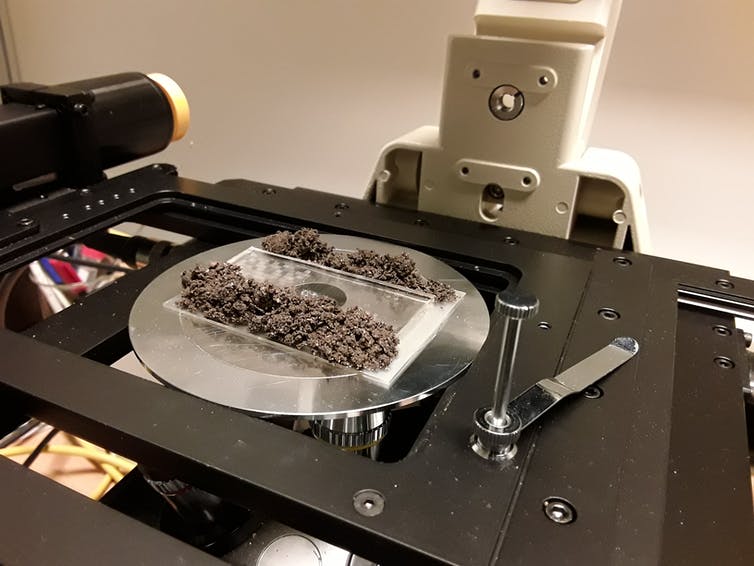
This prompted my lab to develop a way to spy on these underground workers, who are indispensable in their role as organic matter recycling agents, without disturbing their micro-habitats.
Our study revealed the dark, dank cities in which soil microbes reside. We found labyrinths of tiny highways, skyscrapers, bridges and rivers which are navigated by microorganisms to find food, or to avoid becoming someone’s next meal. This new window into what’s happening underground could help us better appreciate and preserve Earth’s increasingly damaged soils.
Read ‘Cyborg soil’ reveals the secret microbial metropolis beneath our feet