Category Archives: Books

Master of Claude de France’s Book of Flower Studies (ca. 1510–1515) via The Public Domain Review [Shared]

Master of Claude de France’s Book of Flower Studies (ca. 1510–1515) via The Public Domain Review

 The image features a detailed illustration of a blue dragonfly perched on a green stem of a flower. The dragonfly has a long, slender body with a blue and green coloration, and its wings are transparent with a delicate pattern. The flower has white petals with a red edge and a yellow center, resembling a daisy. There are three flowers in total, with one fully bloomed, one partially bloomed, and one in bud form. The background is a plain, off-white color, which contrasts with the vibrant colors of the dragonfly and flowers. The illustration is done in a style that suggests it could be from a natural history book or a botanical illustration, with careful attention to the details of the insects and plants.

Despite being full of blooms, this book of floral illustrations marks an autumn in aesthetic history: it was composed during “‘the last flowering’ of northern European manuscript illumination in the medieval tradition”, write curators at the MET. Created in the workshop of the Master of Claude de France, one of the most renowned ateliers in Tours during the early sixteenth century, it takes the form of a model book — and indeed several subsequent commissions linked to Queen Claude drew inspiration from this work. Yet its relative lack of wear and tear has led historians like Jörn Günther to wonder if the manuscript was primarily intended by the Master of Claude de France to be a collection of botanical art in its own right. Having trained with Jean Bourdichon and possibly Jean Poyer, the Master’s true identity remains anonymous in art history, but he and his workshop have been credited with books of hours and books of prayers — generally employing extremely small formats, which fit comfortably into the palm of a hand.

View this entire manuscript

A fearless gardener shares some of her nonrules via GardenRant [Shared]

A fearless gardener shares some of her nonrules – GardenRant

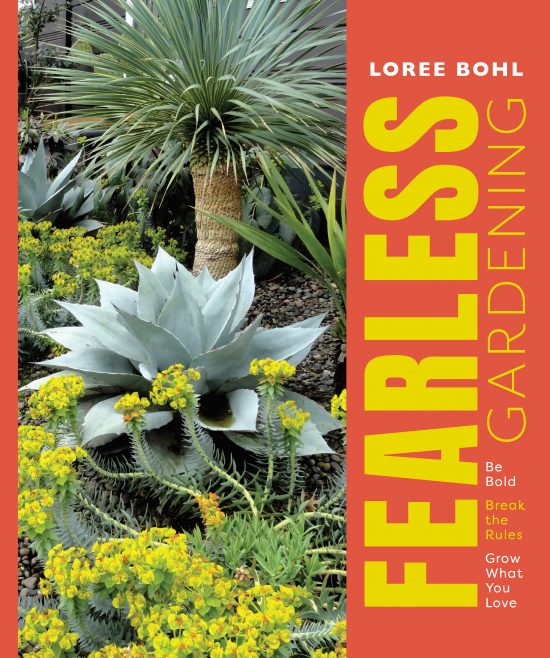
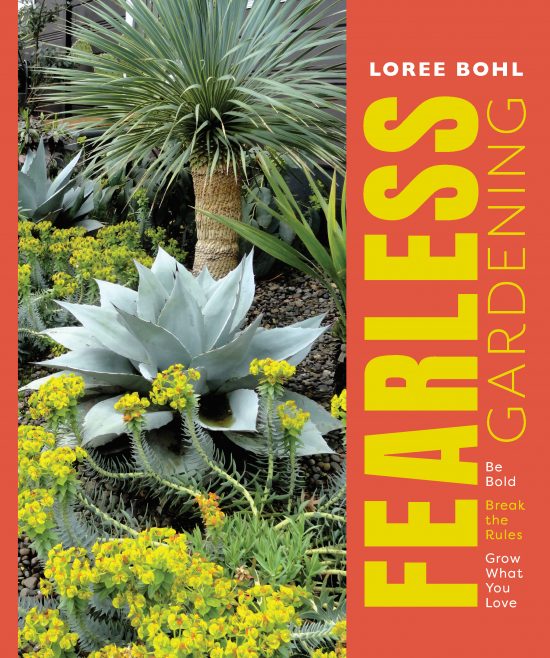
Fearless Gardening Cover 550x658

Do you know what I hate? Being told how I’m supposed to do something. Phrases like “that’s just how it’s done…” or “everybody does it that way” always get my hackles up. Usually, the person giving the advice has nothing but the best intentions, but I still end up questioning why I should listen. Just because that’s how everyone does it doesn’t mean it’s how I want to do it. I’m not “everyone” and neither are you.

Read A fearless gardener shares some of her nonrules – GardenRant

A fearless gardener shares some of her nonrules via GardenRant [Shared]

I often break gardening rules for many reasons — ignorance, laziness, contrarianism. (SMILE) Still, we each find our own way in the gardening world. — Douglas

A fearless gardener shares some of her nonrules – GardenRant

A fearless gardener shares some of her nonrules via GardenRant [Shared]

Do you know what I hate? Being told how I’m supposed to do something. Phrases like “that’s just how it’s done…” or “everybody does it that way” always get my hackles up. Usually, the person giving the advice has nothing but the best intentions, but I still end up questioning why I should listen. Just because that’s how everyone does it doesn’t mean it’s how I want to do it. I’m not “everyone” and neither are you.

Read A fearless gardener shares some of her nonrules – GardenRant

Vintage Botanical Print – 78 in a series – Orange Sherbet from Magasin för Blomster-Älskare och Idkare av Trägårds-Skötsel

The image depicts a botanical illustration of a plant with four flowers. The flowers are vibrant orange with jagged edges and a central cluster of stamens and pistils. The petals have a slightly translucent quality, with visible veins and a gradient of color from a deeper orange at the edges to a lighter shade towards the center. The plant has a green stem with several leaves, some of which are broad and oval-shaped, while others are smaller and more elongated. The leaves have prominent veins and a glossy texture. One flower is partially open, revealing its inner structure, while the others are fully bloomed. The background is a plain, off-white color, which contrasts with the vivid colors of the flowers and leaves. The illustration is detailed and appears to be from a scientific or educational publication, with a signature or initials in the bottom left corner.

Provided by @altbot, generated privately and locally using Ovis2-8B

Click for larger image

Orange Sherbet
Magasin för Blomster-Älskare och Idkare av Trägårds-Skötsel. –
Author: PFEIFFER, August (1777-1842)
Pfeiffer’s “Magazine for Lovers of Flowers” is the first and only flower book in Sweden with hand-coloured plates presenting cultivated decorative flowers and fruit. It is a beautifully hand-coloured flower-book with most of the plates drawn and engraved by Pfeiffer, who also coloured the plates himself.


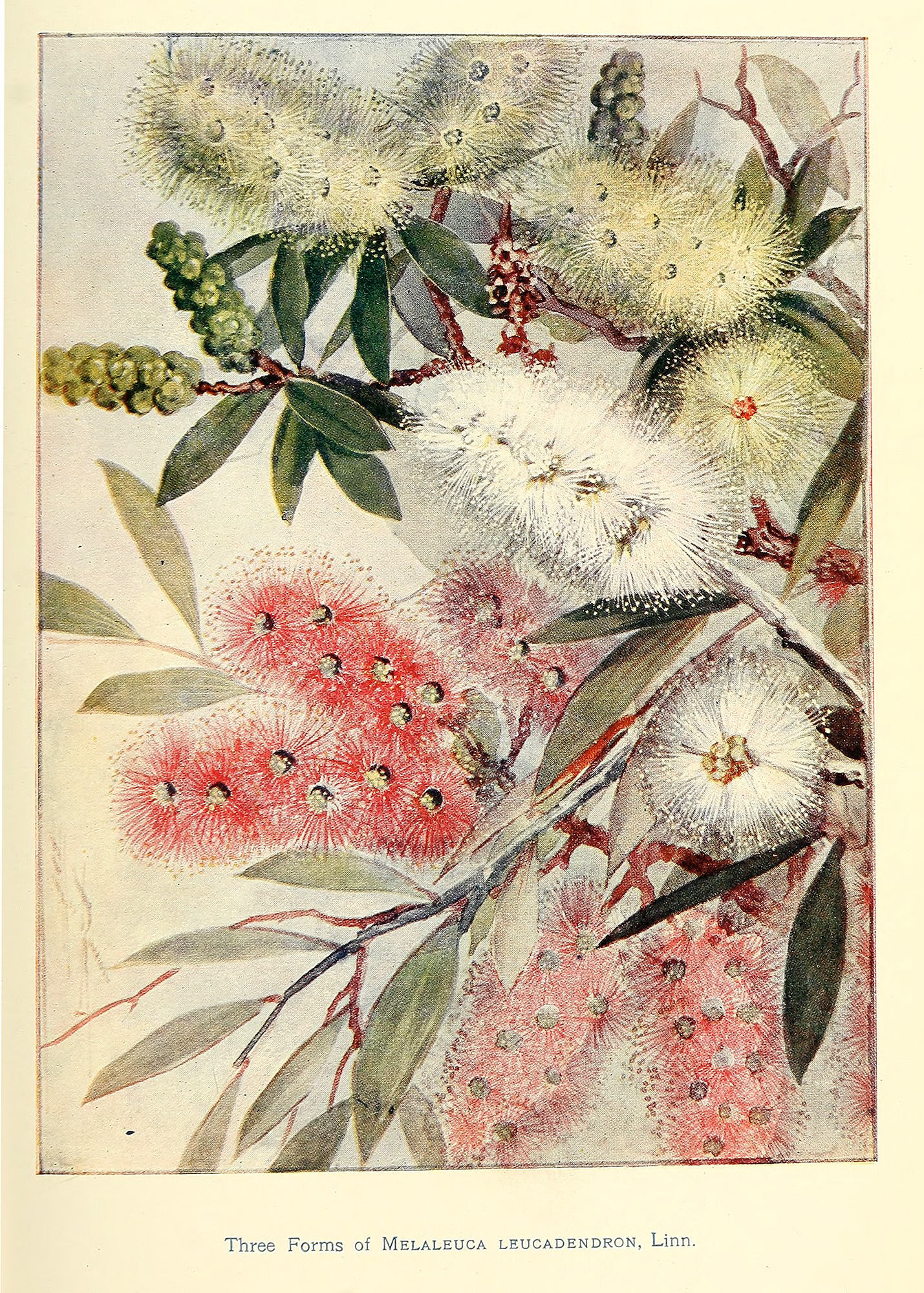
Vintage Botanical Print – 77 in a series- Three Forms of Melaleuca from Comprehensive catalogue of Queensland plants, both indigenous and naturalised (1909)

The image depicts a botanical illustration of the Melaleuca leucadendron plant, showcasing three distinct forms of its flowers. The illustration is detailed and colorful, with a light beige background. The flowers are arranged in clusters, with the top section featuring large, fluffy, yellowish-white blooms, the middle section displaying white flowers, and the bottom section showing vibrant red and pink flowers. Each flower cluster is surrounded by elongated, green leaves with a glossy texture. The branches are reddish-brown, adding contrast to the green leaves and colorful flowers. The illustration is framed by a thin red border, and at the bottom, there is a caption that reads Three Forms of Melaleuca Leucadendron, Linn.

Provided by @altbot, generated privately and locally using Ovis2-8B

Click for larger image


Rocky Mountain Flowers: The Daring Life and Art of Pioneering Plant Ecologist Edith Clements via The Marginalian [Shared]

Rocky Mountain Flowers: The Daring Life and Art of Pioneering Plant Ecologist Edith Clements – The Marginalian

Rocky Mountain Flowers: The Daring Life and Art of Pioneering Plant Ecologist Edith Clements viaThe Marginalian [Shared]

“There is one book that I would rather have produced than all my novels,” Willa Cather rued in her most candid interview about creativity. That book was Rocky Mountain Flowers: An Illustrated Guide For Plant-Lovers and Plant-Users by the pioneering plant ecologist and botanical artist Edith Clements (1874–1971).

Together with her husband, the influential botanist Frederic Clements, she pioneered the science of plant ecology, lending empirical substantiation to her contemporary John Muir’s poetic observation that “when we try to pick out anything by itself, we find it hitched to everything else in the universe.” In her 1960 memoir Adventures in Ecology: Half a Million Miles: From Mud to Macadam , penned shortly before Rachel Carson awakened the modern ecological conscience with Silent Spring and half a century before the climate calamity we are now living, Edith Clements prophesied:

“There seems little doubt that the application of the principles of ecology to human affairs, whether personal, national or world-wide, would go far in solving the problems that beset us.”

Read Rocky Mountain Flowers: The Daring Life and Art of Pioneering Plant Ecologist Edith Clements – The Marginalian

Required Reading: Gardens Under Big Skies—Reimagining Outdoor Space, the Dutch Way via Gardenista [Shared]

Required Reading: Gardens Under Big Skies—Reimagining Outdoor Space, the Dutch Way – Gardenista

Required Reading: Gardens Under Big Skies—Reimagining Outdoor Space, the Dutch Way via Gardenista [Shared]

When we think of the Dutch landscape, water and flatness come to mind—a scene so “monotonous” that British writer Noel Kingsbury used to complain to Holland’s garden superstar Piet Oudolf that it was impossible not to get lost. “Learning to read the landscape takes time,” says Oudolf in the foreword to this erudite and fascinating new book, “and not all visitors are prepared to do that.”

Gardens Under Big Skies, published by Filbert Press, lavishly illustrates that the devil is in the detail: Dutch gardening is distinguished by “its clarity of form and its desire to embrace the contemporary,” in the words of co-author and photographer Maayke de Ridder. The low-lying landscape (about a third of which is below sea level) is key to the rigorously forward-thinking garden scene in the Netherlands.

Read Required Reading: Gardens Under Big Skies—Reimagining Outdoor Space, the Dutch Way – Gardenista

Garden Gear To Covet, And To Give, With Ken Druse Via A Way To Garden [Shared]

Garden Gear To Covet, And To Give, With Ken Druse – A Way To Garden

Ken Druse Scnetual Garden

WHEN KEN DRUSE and I talked on the program a couple of weeks ago about putting our tools away for the winter, all cleaned and oiled, one part we failed to mention: We’re both eyeing some new tools, too, for the year ahead.

All of them would make great gifts, we think, so that’s today’s topic: stuff we love or covet, for gifting or treating yourself to. ‘Tis the season and all that, right? So ho, ho, ho.

You all know Ken Druse, author of 20 garden books and an old friend, who’s here to talk garden gear, including for gifting. To celebrate the holiday season, we’ll have a giveaway of his latest book, “The Scentual Garden.” Enter for a chance to win by commenting in the box near the bottom of the page.

Read along as you listen to the December 13, 2021 edition of my public-radio show and podcast using the player below. You can subscribe to all future editions on Apple Podcasts (iTunes) or Spotify or Stitcher (and browse my archive of podcasts here).

Read garden gear to covet, and to give, with ken druse – A Way To Garden

The image depicts a botanical illustration of a hollyhock plant, scientifically known as Alcea rosea, with the text Malua rosea a rubro written below it. The illustration features two large, open flowers with deep pink petals and lighter pink veins, attached to a green stem with several smaller buds. The leaves are a light blue-green color, and the stem is a vibrant green. At the bottom of the image, two insects are illustrated: a yellow and black striped beetle labeled 1 on the left and a similar beetle labeled 2 on the right. The background is a plain off-white color, and the image is framed by a thin black border. The overall style is reminiscent of historical botanical illustrations, with detailed and precise depictions of the plant and insects. Provided by @altbot, generated privately and locally using Ovis2-8B

Vintage Botanical Prints – 73 in a series – Vintage Malua Rosea Print from Nederlandsch bloemwerk (1794)

The image depicts a botanical illustration of a hollyhock plant, scientifically known as Alcea rosea, with the text Malua rosea a rubro written below it. The illustration features two large, open flowers with deep pink petals and lighter pink veins, attached to a green stem with several smaller buds. The leaves are a light blue-green color, and the stem is a vibrant green. At the bottom of the image, two insects are illustrated: a yellow and black striped beetle labeled 1 on the left and a similar beetle labeled 2 on the right. The background is a plain off-white color, and the image is framed by a thin black border. The overall style is reminiscent of historical botanical illustrations, with detailed and precise depictions of the plant and insects.

Provided by @altbot, generated privately and locally using Ovis2-8B

Click for larger image


Order your own copy of this vintage print and additional products


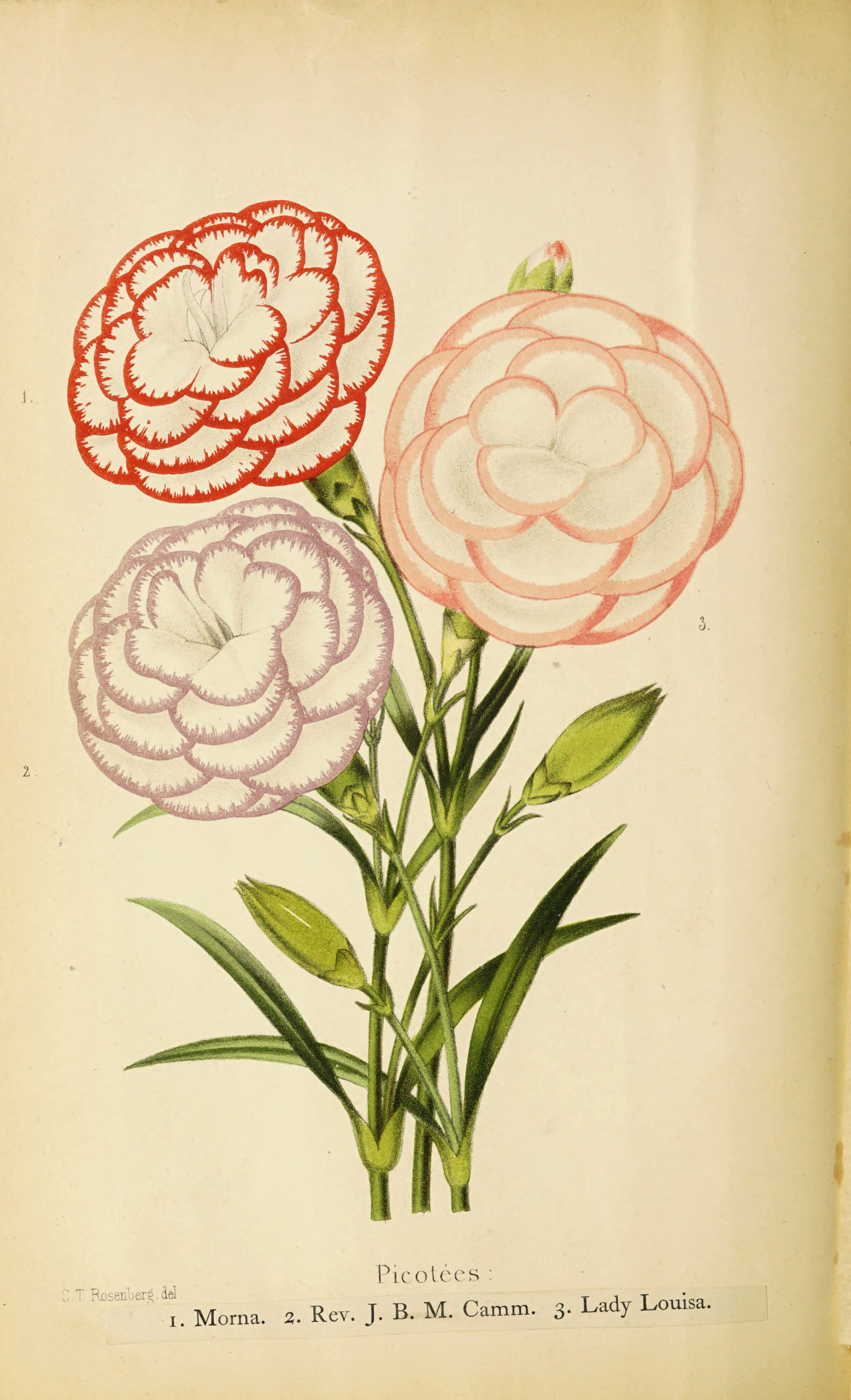
Vintage Botanical Prints – 72 in a series – New Picotees from The florist and pomologist (1879)

Vintage Botanical Prints – 72 in a series – New Picotees from The florist and pomologist (1879)

The image depicts a botanical illustration of three carnations, labeled as Picolées, with the names Morna, Rev. J. B. M. Camm, and Lady Louisa beneath them. The illustration is on a beige background, with the flowers and leaves in vibrant colors. The top flower, labeled 1. Morna, is red with white edges, the middle flower, labeled 2. Rev. J. B. M. Camm, is pink with white edges, and the bottom flower, labeled 3. Lady Louisa, is purple with white edges. Each flower has multiple layers of petals, and the leaves are long and green. The illustration is detailed, with shading and outlines that highlight the texture of the petals and the veins of the leaves. The overall style is reminiscent of 19th-century botanical prints.

Provided by @altbot, generated privately and locally using Ovis2-8B

Click for larger image