Category Archives: Garden History

Vintage Botanical Prints – 74 in a series – Vintage Malus domestica Print from USDA Pomological Watercolors

The image features a detailed illustration of three apples and their leaves. The apples are depicted with a high level of detail, showcasing their textures and colors. The top apple is predominantly red with a brownish base and numerous small red spots. The middle apple is green with a yellowish tint and speckled with small brown spots. The bottom apple is a blend of orange and red, also with small brown spots. The leaves surrounding the apples are green with some brown spots and blemishes, adding to the naturalistic appearance. The background is a plain, off-white color, which contrasts with the vibrant colors of the apples and leaves. The artists signature, Shull, is visible in the bottom right corner of the image.

Provided by @altbot, generated privately and locally using Ovis2-8B

Click for larger image


Decorate your home and office with this print

From Gardening Don’ts (1913) by M.C. 04

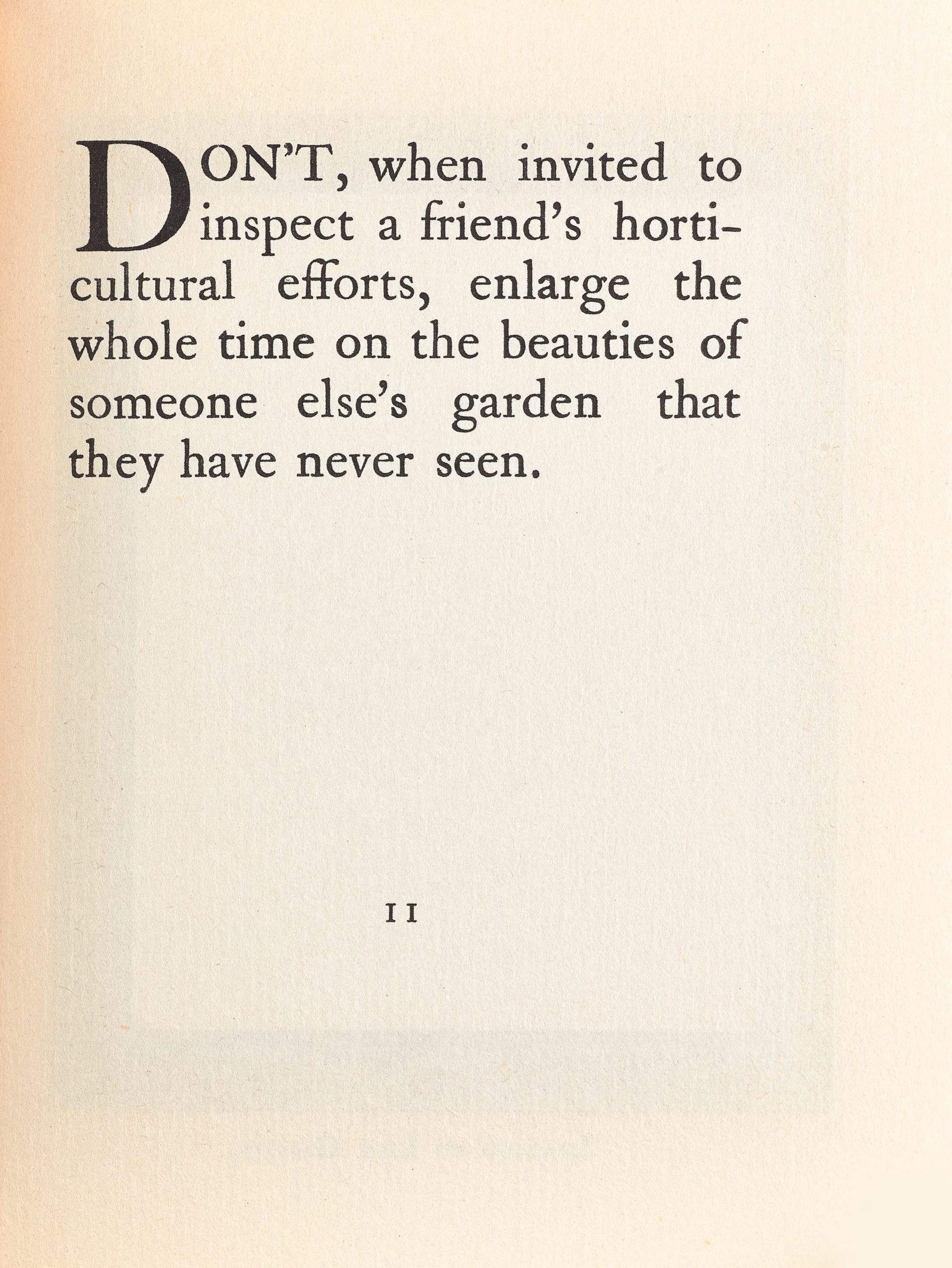
DON’T, when invited to inspect a friend’s horticultural efforts, enlarge the whole time on the beauties of someone else’s garden that they have never seen.

From Gardening Don'ts by M.C. 01

Read and Download the entire book from Archive.org


* A portion of each sale from Amazon.com directly supports our blogs
** Many of these books may be available from your local library. Check it out!

From Gardening Don’ts (1913) by M.C. 03

From Gardening Don'ts (1913) by M.C. 03

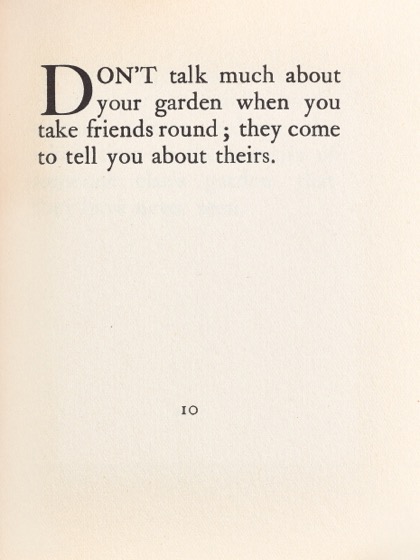
DON’T talk much about
your garden when you
take friends round ; they come
to tell you about theirs.

From Gardening Don'ts by M.C. 01

Read and Download the entire book from Archive.org


* A portion of each sale from Amazon.com directly supports our blogs
** Many of these books may be available from your local library. Check it out!

From Gardening Don’ts (1913) by M.C. 02

From Gardening Don'ts (1913) by M.C. 02

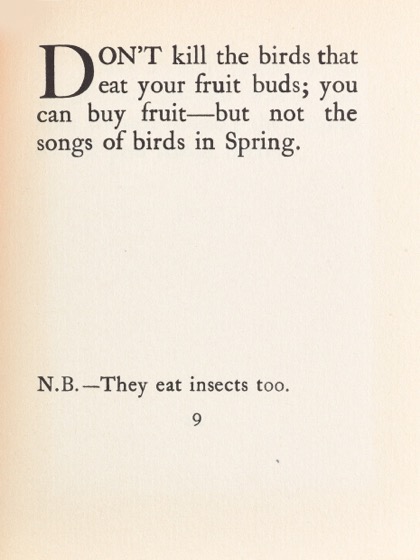
DON’T kill the birds that
eat your fruit buds; you
can buy fruit — but not the
songs of birds in Spring.


N.B. — They eat insects too.

From Gardening Don'ts by M.C. 01

Read and Download the entire book from Archive.org


* A portion of each sale from Amazon.com directly supports our blogs
** Many of these books may be available from your local library. Check it out!

From Gardening Don’ts (1913) by M.C. 01

From Gardening Don'ts by M.C. 01

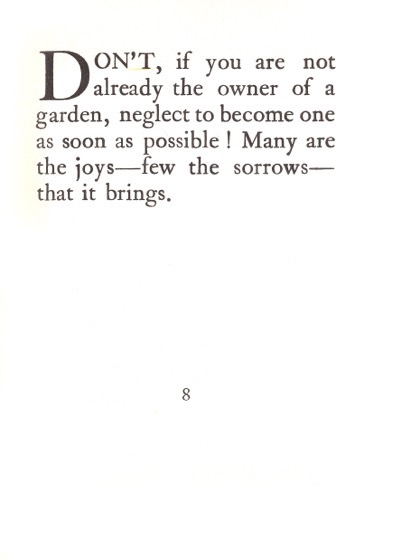
DON’T, if you are not
already the owner of a
garden, neglect to become one
as soon as possible ! Many are
the joys — few the sorrows —
that it brings.

From Gardening Don'ts by M.C. 01

Read and Download the entire book from Archive.org


* A portion of each sale from Amazon.com directly supports our blogs
** Many of these books may be available from your local library. Check it out!

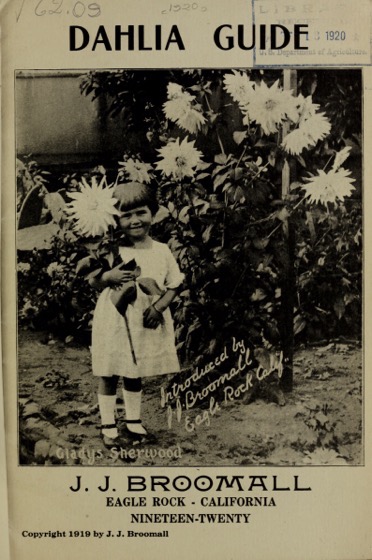
Historical Seed Catalogs: Dahlia guide. Nineteen-twenty / J.J. Broomall (1920) – 33 in a series

Archive.org has a host of old seed catalogs (from mid-19th to mid-20th Century) available in many formats and on a host of topics. I happened across a few in my Pinterest feed and gone completely down the rabbit hole in this treasure trove of information. Sure some ideas might be out of date, but you never know what you might find when you explore these catalogs. I’ll be sharing more catalogs as I find them in the coming weeks. –Douglas

Historical Seed Catalogs: Dahlia guide. Nineteen-twenty / J.J. Broomall (1920) – 33 in a series

Historical Seed Catalogs: Dahlia guide. Nineteen-twenty / J.J. Broomall (1920) - 33 in a series

Historical Seed Catalogs: Dahlia guide. Nineteen-twenty / J.J. Broomall (1920) - 33 in a series

Download in Text, PDF, Single Page JPG, TORRENT from Archive.org

The Dahlia as a Cut Flower

Twenty years ago when I began growing the Dahlia in a commercial way, it was not much in favor as a cut flower. Few florists cared to handle them. The old “Show” Dahlia was too stiff and formal to suit the tastes of their patrons, and the most of the “Cactus” Dahlias being introduced at that time were not good for cutting. There were a few exceptions, for instance the “Countess of Lonsdale” was one that met the requirements as far as stems and keeping qualities were concerned, but it was an “off” color, and was too small to ever become in much demand.

For years I have been trying to improve the Dahlia as a cut flower, and at the risk of being accused of egotism, I will say that I have succeeded beyond my expectations. During the season of 1919 the Dahlia was in greater demand by florists than ever before, and certainly appeared to be the most popular flower in the cut flower market.

For seven years the Cactus Dahlia, Golden West, has outsold all other Dahlias on the market, the supply being utterly inadequate to meet the demand.

What I’m Reading: The Garden Book of California (1906) – 6 in a series – “Then be ready for the planting…”

What I'm Reading: The Garden Book of California (1906) - 6 in a series -

Photo by Karly Jones on Unsplash

“First, in buying nursery stock buy of reliable firms; refuse substitutions, and insist upon healthy and perfect plants. Then be ready for the planting, which means that the conditions of the ground should be right. Too many people put the cart before the horse, and select their trees, for instance, before the place for their reception is ready.”

What I'm Reading: The Garden Book of California (1906) - 1 in a series

Download and Read this for FREE at Archive.org

The Garden Book of California
Belle Sumner Angler


* A portion of each sale from Amazon.com directly supports our blogs
** Many of these books may be available from your local library. Check it out!
† Available from the LA Public Library

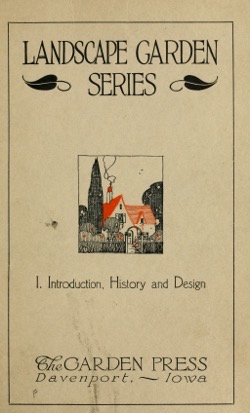
Historical Garden Books: Landscape garden series by Ralph Rodney Root (1921) – 44 in a series

Archive.org has a host of old gardening books (from mid-19th to mid-20th Century) available in many formats and on a host of topics. I happened across a few in my Pinterest feed and gone completely down the rabbit hole in this treasure trove of information. Sure some ideas might be out of date, but you never know what you might find when you explore these catalogs. I’ll be sharing more catalogs as I find them in the coming weeks. –Douglas

Historical Garden Books: Landscape garden series by Ralph Rodney Root (1921) – 44 in a series

Historical Garden Books: Landscape garden series by Ralph Rodney Root (1921) - 44 in a seriesHistorical Garden Books: Landscape garden series by Ralph Rodney Root (1921) - 44 in a series

Historical Garden Books: Landscape garden series by Ralph Rodney Root (1921) - 44 in a seriesHistorical Garden Books: Landscape garden series by Ralph Rodney Root (1921) - 44 in a series

Download in Text, PDF, Single Page JPG, TORRENT from Archive.org

PREFACE TO THE LANDSCAPE GARDEN SERIES

“I never had any other desire so strong and so lie to covetousness, as that one which I have had always, that I might be master at last of a small house and a large garden.” — Abraham Cowley, 1618-1667.

GARDENING is one of the most inexpensive and entertaining pastimes the year round. The gardening year is divided into four regular seasons: winter, or planning time; spring, or planting time; summer, or enjoyment time; autumn, or the season for the harvest of vegetables and fruits. A study of the average home grounds in America seems to show that few people have grasped the principles of garden design or have given to this phase of home making the attention that it deserves.

The object of the Landscape Garden Series is to sei-ve as a guide to garden care and planning. It is not the object of the authors to cover each subject, of this series, in an exhaustive manner, but rather to include in these books such information as will be found helpful in planning and caring for private places.

It has been the endeavor of the writers of this series to avoid sentimental effusions upon incidental details of gardening. Such articles and books upon the subject of^ gardening have done untold good in arousing interest in this fascinating pastime, but it has seemed to the authors of this series that their inspirational literature is not supplemented frequently enough by clear exposition of the fundamental theories of good planning, and by practical information as to how these ideas may be carried out.

The material in these booklets has been arranged so that each phase of landscape work can be studied conveniently and the separate books used as a part of the garden equipment. There is necessarily some duplication in the various papers of the series. It was thought best, in many cases, to permit this dupHcation, especially when such repetition assists in driving home certain fundamental principles.

If through these books a desire can be created for better designed home grounds, and if these books will assist the home owner in making this desire a reality, the authors will feel well repaid for the thought and care which has been required in the arrangement of the material.


* A portion of each sale from Amazon.com directly supports our blogs
** Many of these books may be available from your local library. Check it out!

Historical Seed Catalogs: Henderson’s flowers for American gardens (1921) – 32 in a series

Archive.org has a host of old seed catalogs (from mid-19th to mid-20th Century) available in many formats and on a host of topics. I happened across a few in my Pinterest feed and gone completely down the rabbit hole in this treasure trove of information. Sure some ideas might be out of date, but you never know what you might find when you explore these catalogs. I’ll be sharing more catalogs as I find them in the coming weeks. –Douglas

Historical Seed Catalogs: Henderson’s flowers for American gardens (1921) – 32 in a series

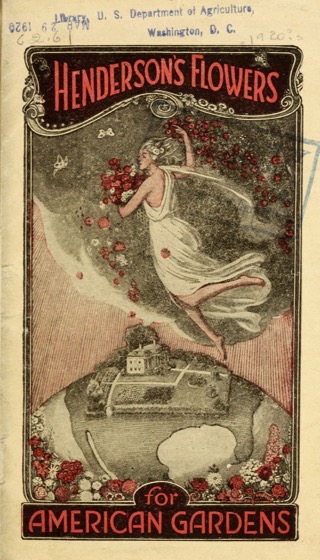
 The image is a vintage advertisement for "Henderson's Flowers for American Gardens." The top of the image features the title in bold red letters against a black background, with ornate floral designs framing the text. Below the title, a central illustration depicts a woman in a flowing white dress, holding a bouquet of red flowers, with more flowers and butterflies surrounding her. She appears to be in mid-air, suggesting a sense of movement and grace. The background is a dark, swirling pattern, enhancing the ethereal quality of the scene.

At the bottom of the image, a detailed illustration of a garden with a house, pathways, and a pond is visible, surrounded by a border of red and white flowers. The text "for AMERICAN GARDENS" is prominently displayed in red letters at the bottom, emphasizing the product's intended use. The overall design is reminiscent of early 20th-century advertising, with a focus on beauty and elegance.

Provided by @altbot, generated privately and locally using Ovis2-8B

Download in Text, PDF, Single Page JPG, TORRENT from Archive.org

HENDERSON’S FLOWER SEEDS

Probably no outdoor occupation gives so much pleasure as the cultivation of flowers from seed. Starting with the tiny grains of seed, placing them carefully in suitable soil, watching the conditions of air and moisture while the seeds are nidden below the ground, and the gradual unfolding of the tiny seedling, and later the miraculous development of leaf, stem and branch until finally the fully grown plant bursts into glorious flower; this is the pleasure awaiting one who grows flowers from seed.

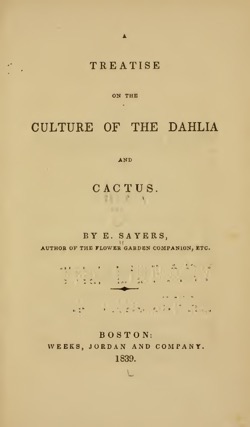
Historical Garden Books: Treatise culture of the dahlia and cactus by E. Sayers (1839) – 44 in a series

Archive.org has a host of old gardening books (from mid-19th to mid-20th Century) available in many formats and on a host of topics. I happened across a few in my Pinterest feed and gone completely down the rabbit hole in this treasure trove of information. Sure some ideas might be out of date, but you never know what you might find when you explore these catalogs. I’ll be sharing more catalogs as I find them in the coming weeks. –Douglas

Historical Garden Books: Treatise culture of the dahlia and cactus by E. Sayers (1839) – 44 in a series

People have been writing about Dahlias for a long, long time! — Douglas

Historical Garden Books: Treatise culture of the dahlia and cactus by E. Sayers (1839) - 44 in a seriesHistorical Garden Books: Treatise culture of the dahlia and cactus by E. Sayers (1839) - 44 in a series

Download in Text, PDF, Single Page JPG, TORRENT from Archive.org

PREFACE.

The general desire manifested by the lovers of choice flowers to improve the beautiful tribes of the Dahlia and Cactus, has induced the writer to compile this little treatise. He does not pretend that the following pages are entirely original; he acknowledges his obligations to the late works of Paxton and M’Intosh, two of the most eminent floriculturists in Great Britain. So far, however, as these pages have any claim to originality, the compiler has drawn from an experience of no recent date in the general culture of flowers, during which he has paid particular attention to the Dahlia and Cactus. The favorable reception which, in the present enlightened state of horticulture, is extended to every consistent effort for the improvement of any of its departments, encourages him to send his little treatise to the press ; and that it may have a tendency to strengthen the impulse already prevalent in the culture of choice flowers is his earnest wish. May, 1839.


* A portion of each sale from Amazon.com directly supports our blogs
** Many of these books may be available from your local library. Check it out!