Monthly Archives: January 2020

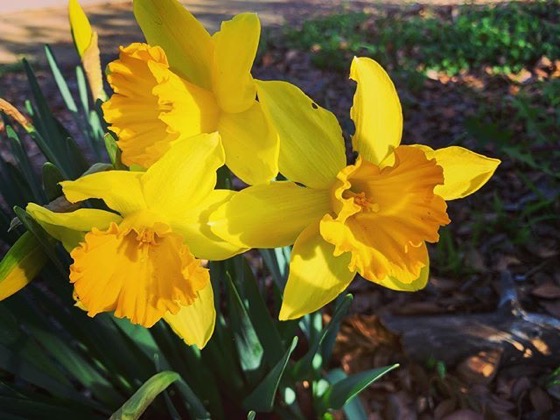
First Daffodils 2020 via Instagram

First Daffodils 2020

First Daffodils 2020 via Instagram

The daffodils have returned and are beginning to flower all over the garden.


Don’t miss a single post!

Sign up for the Gardener’s Notebook Mailing List


See all my garden, flowers and nature related products at

 DouglasEWelch.com/shop/

Find more at @DEWDesignPhoto

From Gardening Don’ts (1913) by M.C. 13

From Gardening Don'ts (1913) by M.C. 13

DON’T, if your neighbour
prides himself on the
beauty of the garden he has
made, tell him that the fine
trees he found there when
he came constitute its chief
beauty!

From Gardening Don'ts by M.C. 01

Read and Download the entire book from Archive.org


* A portion of each sale from Amazon.com directly supports our blogs
** Many of these books may be available from your local library. Check it out!

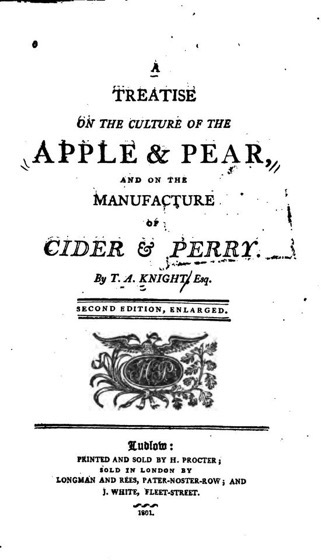
Historical Garden Books – 63 in a series – A Treatise on the Culture of the Apple & Pear: And on the Manufacture of Cider & Perry (1801) by Thomas Andrew Knight

Historical Garden Books – 63 in a series – A Treatise on the Culture of the Apple & Pear: And on the Manufacture of Cider & Perry (1801) by Thomas Andrew Knight

Historical Garden Books - 63 in a series - A Treatise on the Culture of the Apple & Pear: And on the Manufacture of Cider & Perry (1801) by Thomas Andrew Knight

Download in Text, PDF, Single Page JPG, TORRENT from Archive.org


* A portion of each sale from Amazon.com directly supports our blogs
** Many of these books may be available from your local library. Check it out!

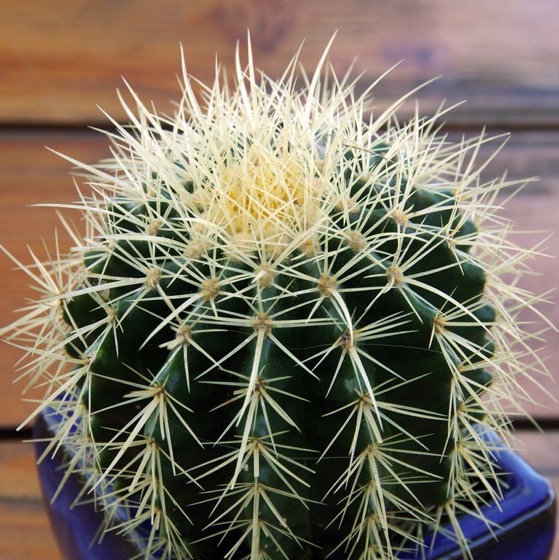
Captivating Cactus and Striking Succulents: 19 in a series – 15 of the Best Types of Cactus You Can Grow at Home via Country Living

Captivating Cactus and Striking Succulents: 198 in a series – 15 of the Best Types of Cactus You Can Grow at Home via Country Living

Captivating Cactus and Striking Succulents: 198 in a series - 15 of the Best Types of Cactus You Can Grow at Home via Country Living

If you’ve been feeling the call to make like Joanna Gaines and embrace your inner “crazy plant lady,” an indoor cactus or succulent garden is a great place to start. Did you know all cacti are succulents but not all succulents are cacti? All succulents store water in their stem or foliage, but cacti also feature areoles, the little bumps on the outside of the plant that the spines grow from. With the proper care, these desert-native plants can be just as happy growing on a shelf inside your home. A cactus requires little care—it can even tolerate some neglect as some types only need to be watered every two to three months. They can live for decades, so even the black-thumbed among us can find success. Our list of best cactus garden tips answers all of your questions on soil, containers, and watering. Cacti come in all shapes and sizes, and some even boast brightly colored flowers. Ready to up your houseplant game with some less-prickly selections? Branch out with these choices.

Read the entire article

Follow @agardenersnotebook on Instagram

Like A Gardener’s Notebook on Facebook


* A portion of each sale from Amazon.com directly supports our blogs
** Many of these books may be available from your local library. Check it out!

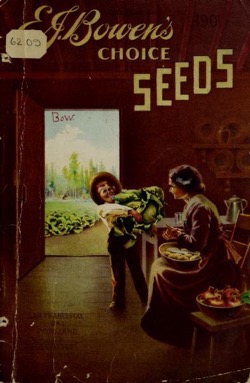
Historical Seed Catalogs: Illustrated and descriptive seed catalogue and price list by E.J. Bowen (1901) – 51 in a series

Historical Seed Catalogs: Illustrated and descriptive seed catalogue and price list by E.J. Bowen (1901) – 51 in a series

Historical Seed Catalogs: Illustrated and descriptive seed catalogue and price list by E.J. Bowen (1901) - 51 in a seriesHistorical Seed Catalogs: Illustrated and descriptive seed catalogue and price list by E.J. Bowen (1901) - 51 in a series

Historical Seed Catalogs: Illustrated and descriptive seed catalogue and price list by E.J. Bowen (1901) - 51 in a seriesHistorical Seed Catalogs: Illustrated and descriptive seed catalogue and price list by E.J. Bowen (1901) - 51 in a series

Download in Text, PDF, Single Page JPG, TORRENT from Archive.org


Books on Garden History

“This post contains affiliate links. If you click through and make a purchase, I may earn a commission.

Dazzling Dahlias – 17 in a series – Pompon and Ball Dahlias to Grow via BBC Gardeners’ World Magazine

All dahlias are flamboyant and gorgeous but there’s something extra special about pompon and ball dahlias, with their exquisite globe-shaped flowers. They are often seen at flower shows and gardening competitions and make beautiful cut flowers.

 
Pompon dahlias, as their name suggests, have pompon-like flowers – the petals curve inwards to create stunning, intricate blooms up to 5cm across. Ball dahlias have a slightly flattened top, with blunt or rounded petals arranged in a spiral pattern. Miniature ball dahlias make good container displays – try our dahlia and cosmos display.

Read Pompon and Ball Dahlias to Grow via BBC Gardeners’ World Magazine


An interesting link found among my daily reading

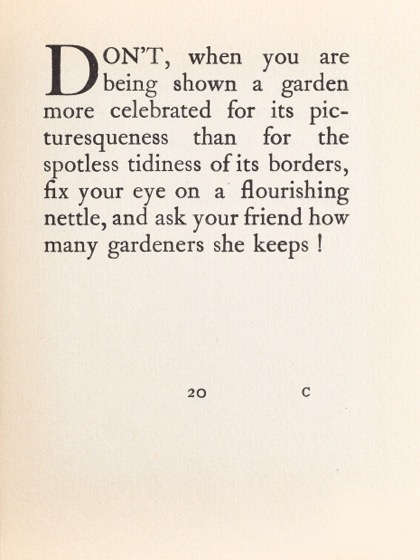
From Gardening Don’ts (1913) by M.C. 12

From Gardening Don'ts (1913) by M.C. 12

DON’T, when you are
being shown a garden
more celebrated for its pic-
turesqueness than for the
spotless tidiness of its borders,
fix your eye on a flourishing
nettle, and ask your friend how
many gardeners she keeps !

From Gardening Don'ts by M.C. 01

Read and Download the entire book from Archive.org


* A portion of each sale from Amazon.com directly supports our blogs
** Many of these books may be available from your local library. Check it out!

Historical Garden Books – 62 in a series – The tree book by Inez N. McFee

Historical Garden Books – 62 in a series – The tree book by Inez N. McFee

Historical Garden Books - 62 in a series - The tree book by Inez N. McFee

Historical Garden Books - 62 in a series - The tree book by Inez N. McFee

Download in Text, PDF, Single Page JPG, TORRENT from Archive.org


FOREWORD

In this little volume the author has brought together an interesting fund of information concerning the life history of the common species of American trees, and such foreign species that have been acclimated here, as one may ordinarily meet in garden and forest, together with the folk-lore and poetic fancies associated with them.

In The Life and Work of the Trees, the suggestions for interpreting the sign language of the trees lead the young student into the open to gather all manner of interesting facts concerning the hopes and disappointments of the trees about him, the trouble with their neighbors, the secrets of age, how they prune themselves, and how they take care of cuts, bruises and broken limbs. How the trees grow, and the record of the year’s work from the stirring of the sap and the coming of the first fruit and leaf buds, to blossom-time, and on to seed-time and sowing, the falling leaves, and the sleep of the trees, is most fascinatingly told.

Read more


* A portion of each sale from Amazon.com directly supports our blogs
** Many of these books may be available from your local library. Check it out!

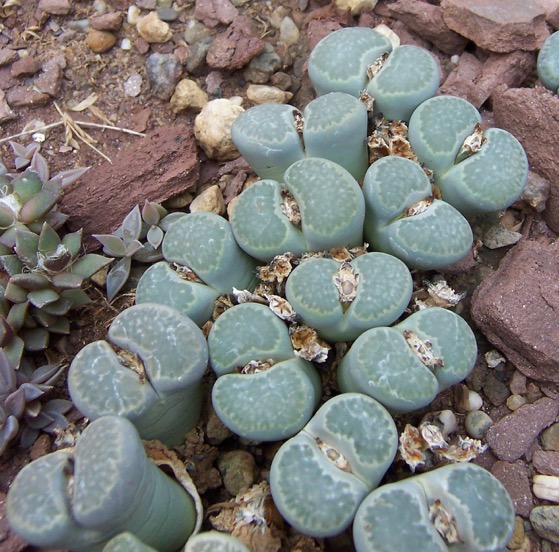
Captivating Cactus and Striking Succulents: 18 in a series – Lithops (Living Stones)

Captivating Cactus and Striking Succulents: 18 in a series – Lithops (Living Stones)

Lithops is a genus of succulent plants in the ice plant family, Aizoaceae. Members of the genus are native to southern Africa. The name is derived from the Ancient Greek words λίθος (lithos), meaning “stone,” and ὄψ (ops), meaning “face,” referring to the stone-like appearance of the plants. They avoid being eaten by blending in with surrounding rocks and are often known as pebble plants or living stones. The formation of the name from the Greek “-ops” means that even a single plant is called a Lithops. — Wikipedia

Captivating Cactus and Striking Succulents: 18 in a series - Lithiops (Living Stones)

By Dysmorodrepanis – Own photo, Cologne University Botanical Collection, CC BY-SA 3.0, Link

Lithops olivacea RSA 5

By Abu ShawkaOwn work, CC BY-SA 3.0, Link

Follow @agardenersnotebook on Instagram

Like A Gardener’s Notebook on Facebook


* A portion of each sale from Amazon.com directly supports our blogs
** Many of these books may be available from your local library. Check it out!

Growing Wild: Gardening as a sensory experience via Daily Hampshire Gazette

Growing Wild: Gardening as a sensory experience via Daily Hampshire Gazette
Gardening is in part so deeply satisfying because it has the ability to stoke all of the senses, but none more profoundly than our sense of smell. Fragrance in the garden has the power to unearth old memories and to etch new ones, to connect us deeply to our own cycles of life on earth. For me, the smell of wisteria instantly brings me back to the library parking lot of my childhood, and while I am happily rooted in the present, there is a thrill in being whisked instantly and briefly into the feeling of being a child. Right now the smell of paperwhites fills my home; forcing these bulbs indoors every winter is a ritual that I have been doing now since I was young. The gardens that I build now incorporate elements of all of the places I have passed through, and scent is one of the most elemental ways in which this connection is made.