Garden History: Pittville Gardens, Cheltenham, England

What is it about water in the garden? Are we attracted by the sound, the sight, the reflections that dance across the surface? It is sure that water elements in the garden attract humans and wildlife like flowers attract bees. There is something soothing and contemplative about water whether it be a still pond, or burbling brook or a roaring river, complete with waterfall.

This photo from Pittville Gardens in Cheltenham, UK includes yet another element of water features in the garden…a lovely bridge arching over the water, giving a new, higher, more expansive few of the entire view. It doesn’t seem to matter how large or small the bridge, it also attracts viewers much like the water itself.

[Pittville Gardens, Cheltenham, England]  (LOC)

You can find detailed information on Pittville Gardens — which still exists — from the Cheltenham web site

“Opened in 1825, Pittville Park is the largest ornamental park in Cheltenham and features the magnificent Pump Room and lakes. This park is given a grade 2 listing under the English Heritage register of historic parks and gardens, with the Pump Room as a grade 1 historic building.” — Cheltenham.co.uk

Pittville Gardens, Cheltenham, England (LOC)

[Pittville Gardens, Cheltenham, England]

[between ca. 1890 and ca. 1900].

1 photomechanical print : photochrom, color.

Notes:
Title from the Detroit Publishing Co., Catalogue J–foreign section, Detroit, Mich. : Detroit Publishing Company, 1905.
Print no. “10728″.
Forms part of: Views of the British Isles, in the Photochrom print collection.

Subjects:
England–Cheltenham.

Format: Photochrom prints–Color–1890-1900.

Rights Info: No known restrictions on reproduction.

Repository: Library of Congress, Prints and Photographs Division, Washington, D.C. 20540 USA,hdl.loc.gov/loc.pnp/pp.print

Part Of: Views of the British Isles (DLC) 2002696059

More information about the Photochrom Print Collection is available athdl.loc.gov/loc.pnp/pp.pgz

Higher resolution image is available (Persistent URL): hdl.loc.gov/loc.pnp/ppmsc.08159

Call Number: LOT 13415, no. 181 [item]

Previously in Garden History:

Garden Decor: Amazing river stone mosaic path

Amazing river stone mosaic path

This amazing path immediately caught my eye as I browsed through Pinterest today. The amount of design, planning and installation work involved seems amazing. I don’t think I would ever have the patience to start a project like this, let along complete it. That said, what an amazing statement this would make in any garden. The contrast among the stone colors and their contrast against the green of the plantings is wonderful and striking. While I don’t think I could ever make this myself, I would certainly be willing to pay quite a lot to have it done for me.

Mosaic path

from Maggy Howarth Cobblestone Designs Via Pinterest
 
More on Mosaic Path projects:

Previously in Garden Decor:

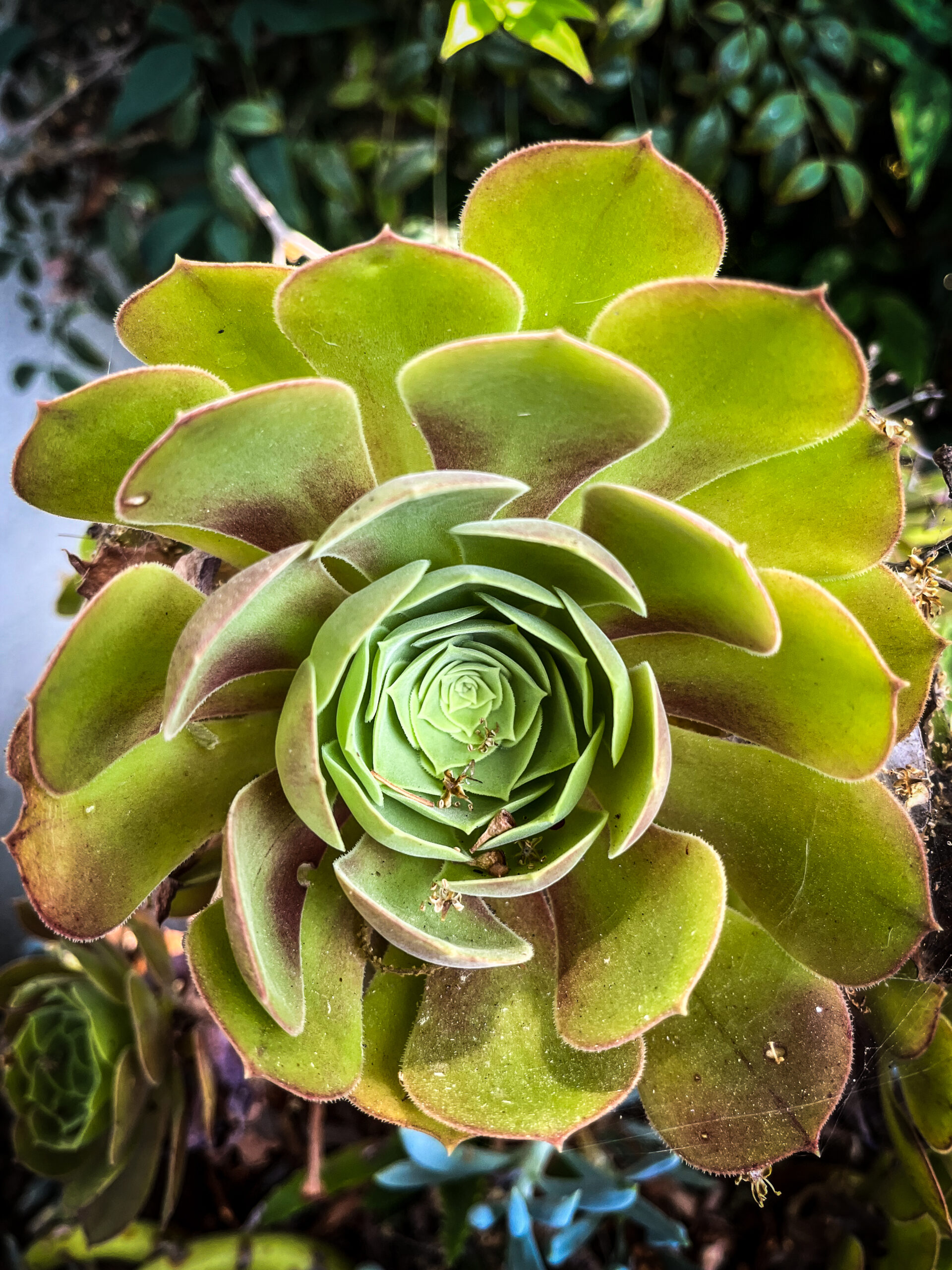
Interesting Plant: Sempervivum ‘Westerlin’

Interesting Plant: Sempervivum ‘Westerlin’

Sempervivum westerlin

Via Cesar Gabriel Basualdo Rossi on Pinterest

Interesting Plant: Sempervivum ‘Westerlin’

Sempervivum (pron.: /sɛmpəˈvaɪvəm/),[1] is a genus of about 40 species of flowering plants in the Crassulaceae family, known as houseleeks. Other common names include liveforever and hen and chicks. They are succulent perennials forming mats composed of tufted leaves in rosettes. In favourable conditions they spread rapidly via offsets, and several species are valued in cultivation as groundcover for dry, sunny spots.[2] — Wikipedia

An amazingly colored “Hens and Chicks” — the common name for sempervivums. My grandmother always had tons of these in pots which alternated between houseplants and container plants according to the season. The common name comes from the sempervivums trait of throwing off offsets along its edge which can eventually — and easily — be detached and grown into new plants.

Follow Me on Pinterest

More information on Sedum sarmentosum:

Previously in the Interesting Plant series: 

Garden Inventory: Podocarpus

Garden Inventory: Podocarpus

Podocarpus (pron.: /ˌpoʊdəˈkɑrpəs/;[1] from the Greek, podos, meaning “foot”, and karpos, meaning “fruit”) is a genus of conifers, the most numerous and widely distributed of the podocarp family Podocarpaceae. The 105 species of Podocarpus are evergreen shrubs or trees from 1-25 m (rarely to 40 m) in height. The leaves are 0.5-15 cm long, lanceolate to oblong, falcate (sickle-shaped) in some species, with a distinct midrib, and are arranged spirally, though in some species twisted to appear in two horizontal ranks. The cones have two to five fused scales, of which only one, rarely two, are fertile, each fertile scale with one apical seed. At maturity, the scales become berry-like, swollen, brightly coloured red to purple and fleshy, and are eaten by birds which then disperse the seeds in their droppings. The male (pollen) cones are 5-20 mm long, often clustered several together. Many species, though not all, are dioecious. – Wikipedia.org

Several of these trees are planted along our northern wall. I often see podocarpus used here in the San Fernando Valley of Los Angeles as privacy trees, although my particular trees aren’t very useful for this. I would guess that due to pruning all their foliage is atop a large, bare, trunk. It could also be a property of the particular variety of podocarpus, which I have not been able to discern.

These are not my favorite trees on the property and had I been willing to spend the money, I probably would have removed them long ago. They were planted to close to both the house and wall, they are, frankly, ugly in their shape — probably due to years of bad pruning — and they drop a tremendous amount of leaves that cover our roof and seem to get everywhere. I can see a future plan of removing these and placing some more decorative shrubs in the area.

Podocarpus seems to be a huge genus with lots of variety in growth habit, leaves and bark. They are listed as conifers, which surprises me, and some varieties look much more like a yew or fir than my specimens. I would probably be happier with a variety with those properties. 

Garden Inventory: Podocarpus - 4

Garden Inventory: Podocarpus - 9Garden Inventory: Podocarpus - 8Garden Inventory: Podocarpus - 7Garden Inventory: Podocarpus - 6

Garden Inventory: Podocarpus - 5Garden Inventory: Podocarpus - 3Garden Inventory: Podocarpus - 2Garden Inventory: Podocarpus - 1

Photos of Podocarpus with closeups of  leaves,  bark, and growing habit.

More information on Podocarpus:

Previously on Garden Inventory:

Garden Inventory is a series where I begin an inventory of all the plants and trees in my garden. Along with some of my own pictures, I will link to various sources of information about each plant and tree so we can learn a little more together.

I would also like to highlight your special plants and tress. Pass along your favorite plants in the comments and I will use them for future Garden Inventory posts. — Douglas

Video: Container Garden Update 26: More cuttings and some progress on our first batch

Agn artwork

It’s raining — in Los Angeles — in May! Almost unheard of! Still a few sprinkles can’t keep us out of the garden.

I check in the containers including the strawberries, herb pot, nasturiums and everything on the potting bench. New propagation attempts include jacaranda, jasmine, Clytostoma and more rosemary starts in water instead of soil.

What’s happening in your garden? I’d love to know! Leave your questions and comments here or on any of the web and social media sites linked below!

Can’t see the video above? Watch “Container Garden Update 26″ on YouTube

Watch the “Container Vegetable Garden” Playlist for all related videos

Please like this video and/or subscribe to my channel on YouTube. Your LIKES directly effect how many others will see this video.

Video shot with Canon VIXIA HF R400 HD

Music: “Whiskey on the Mississippi” Kevin MacLeod (incompetech.com)  - Licensed under Creative Commons: By Attribution 3.0

Horticulture/Garden Jobs Available – Search by location and keyword

Check out our list of horticulture jobs (and others) available via SimplyHired.com.

Enter your location for jobs close to you. You can also search on other keywords.

Horticulture jobs

Free Magnolia Desktop, Tablet and Smartphone Wallpaper for May 2013

Here is a selection of free wallpapers for your computer desktop or smartphone. Right-click and select Save Image As… to download them to your own computer. On your smartphone, click the image to see the full-sized image, tap and hold, then select Save to Camera Roll. You can then attach the wallpapers using your phone’s preferences.

Desktop Wallpaper

Download full-sized version

iPad/Tablet Wallpaper

Download full-sized iPad/Tablet wallpaper

iPhone4/Smartphone Wallpaper

Download full-sized iPhone 4 wallpaper

iPhone5/Smartphone Wallpaper

Download Full-sized iPhone 5 Wallpaper

Previous garden wallpapers:

Subscribed 36: The Rusted Vegetable Garden with Gary Pilarchik

Subscribed 36: The Rusted Vegetable Garden with Gary Pilarchik

Both a blog and YouTube Channel, Gary provides a wealth of gardening information. I subscribe to both the blog and the YouTube Channel, although I discovered him through his channel first. I find myself making lots of notes when I watch his videos. I am trying to grow more vegetables her in my garden and I find that my 40 year old knowledge of vegetable gardening can be quite lacking sometimes. It is great to have a straightforward demos and advice to turn to when I need a refresher.

Subscribe to Gary’s YouTube Channel

What are some of your favorite Subscriptions? Share them here in the comments!

Previously highlighted on Subscribed:

Subscribed is a Careers in New Media series highlighting the Podcasts, YouTube Channels and Blogs that I follow on a daily basis. Check out this entry, and past entries, for some great New Media Content — Douglas

Garden Alphabet: Sweet Potato (Ipomoea batatas)

Garden Alphabet: Sweet Potato

Growing food is one of the most fulfilling things you can do in your garden although growing flowers also provides much for the soul. My wife has been pushing me to grow more food for the last several years, so when these sweet potatoes started sprouting in the pantry, it seemed a frugal way to try growing them out in the garden. These vines are taking off very well and I am hoping for a big crop of sweet potatoes for my curry in the coming months.

Sweet potato

Sweet Potato (Ipomoea batatas)

The sweet potato (Ipomoea batatas) is a dicotyledonous plant that belongs to the family Convolvulaceae. Its large, starchy, sweet-tasting, tuberous roots are a root vegetable.[1][2] The young leaves and shoots are sometimes eaten as greens. Of the approximately 50 genera and more than 1,000 species of Convolvulaceae, I. batatas is the only crop plant of major importance—some others are used locally, but many are actually poisonous. The sweet potato is only distantly related to the potato (Solanum tuberosum) and does not belong to the nightshade family. – Wikipedia.org

 
More information on the Orchidaceae:
 

Previously in Garden Alphabet:


Video: In the garden…May 3, 2013: Poor drainage makes for potato problems

“In the garden…” is a series for A Gardener’s Notebook highlighting what is happening in my garden, my friend’s gardens and California gardens throughout the seasons.

It looks like the potato die-off is related to poor drainage. Learn from my mistake. I plant some sunflower seeds to fill the hole and plop a zucchini and tomato into the garden, too

Watch all the past “In the garden…” videos in this YouTube playlist.


Please Like this video and/or subscribe to my channel on YouTube.

Your likes and subscriptions directly reflect how many other viewers are suggested this video.

It looks like the potato die-off is related to poor drainage. Learn from my mistake. I plant some sunflower seeds to fill the hole and plop a zucchini and tomato into the garden, too