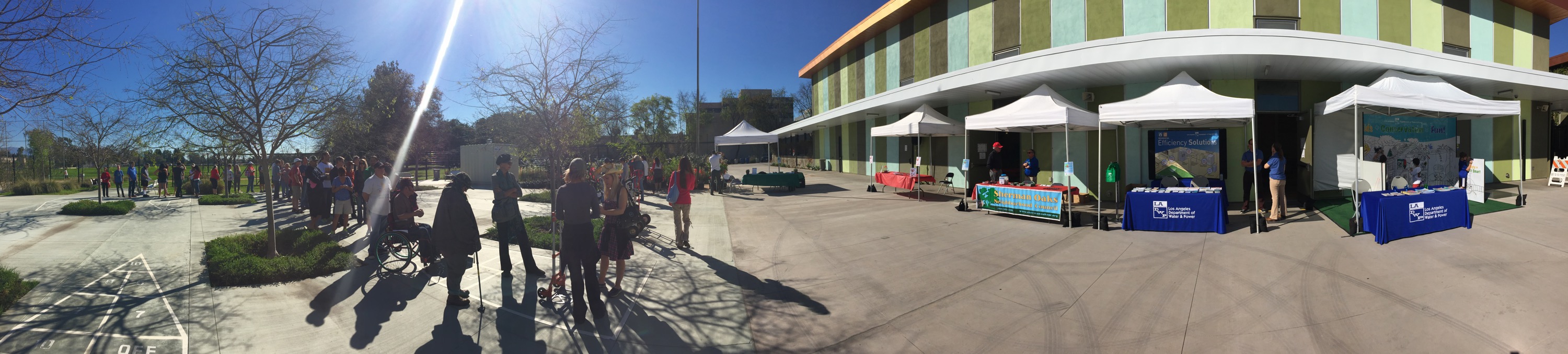
A few pictures from today’s event.
Click for full-size images.
I recorded these Dark-eyed junco (Junco hyemalis) in early evening here in my San Fernando Valley garden.
Check out my collection of gardening essays, “From A Gardener’s Notebook” now available as a Kindle eBook. (You don’t need a Kindle to read it, though. Read it on your PC, Link: http://j.mp/fagnbook
Watch all past episodes of “In the garden…” in this YouTube Playlist
Please Like this video and/or subscribe to my channel on YouTube.
Your likes and subscriptions directly reflect how many other viewers are suggested this video.
Subscribe to my YouTube Channel
“In the garden…” is a series for A Gardener’s Notebook highlighting what is happening in my garden, my friend’s gardens and California gardens throughout the seasons.
Podcast: Play in new window | Download
Subscribe: RSS
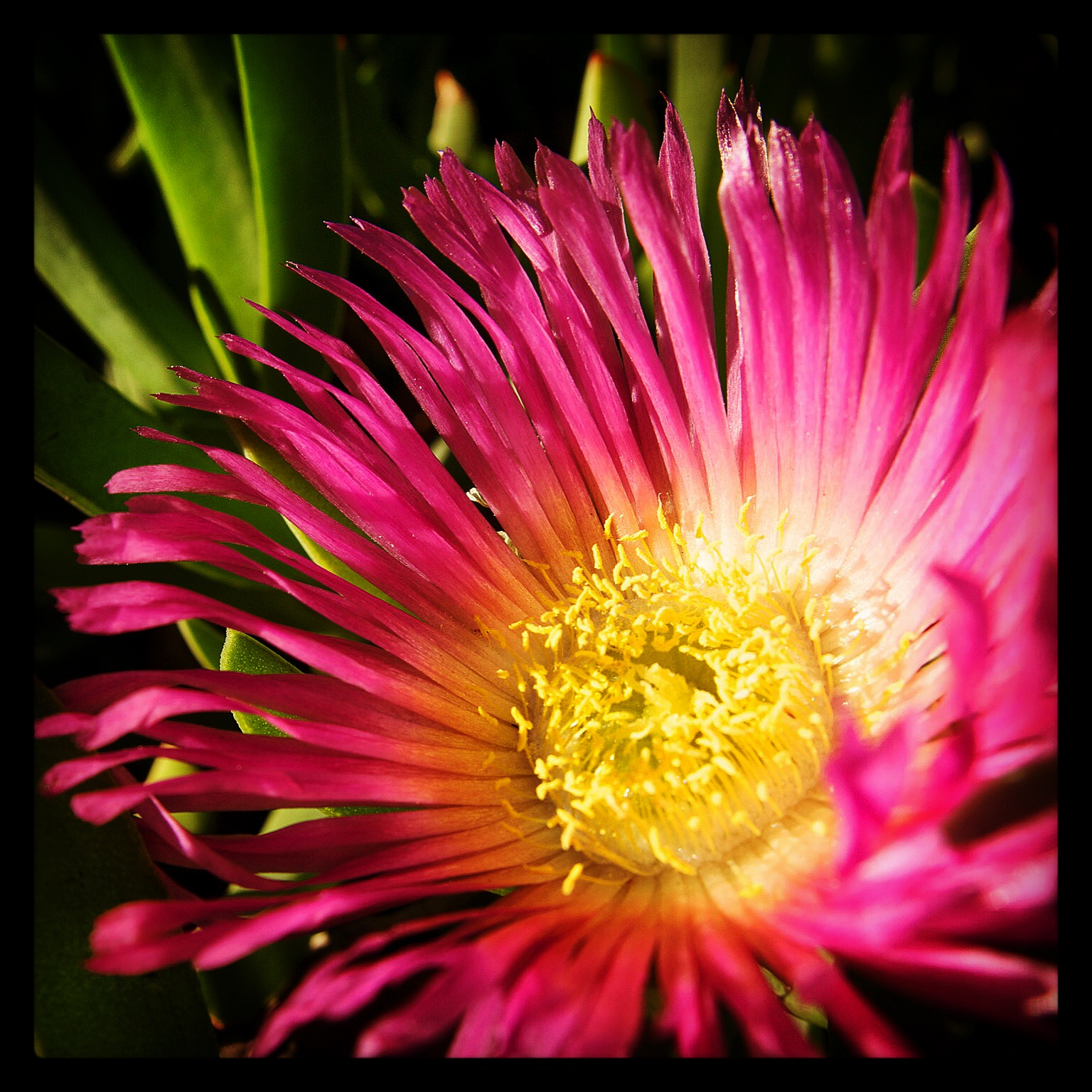
Caught out on my neighborhood walk this week, this ice plant flower glowed in the afternoon sun.
Previously in my Instagram Photos…
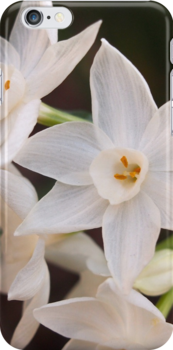
Buy this photo on these products and more via RedBubble


iPhone and Samsung Cases | Cards and Wall-sized photographic prints
This photo, and more, available on a variety of products from RedBubble. Order directly online.
Douglas Iris (Iris douglasiana) via BeWaterWise.com
A few months ago I was invited down the office of the Metropolitan Water District to meet a number of people involved in their BeWaterWise.com project to help reduce water usage in California. As part of their efforts, they focus on providing plant alternatives to water hungry lawns. Over the next several weeks, I will be highlighting some of their garden alternatives as part of this series. For more information on these plants and other water conservation ideas and programs, vist BeWaterWise.com. Follow the MWD on Twitter at BeWaterWiseH2O— Douglas

“Iris douglasiana flower 2003-03-17“. Licensed under CC BY-SA 2.5 via Wikimedia Commons.
Iris douglasiana (Douglas iris, syn. I. beechiana, I. watsonia) is a common wildflower of the coastal regions of Northern and Central California and southern Oregon in the USA. The Douglas Iris was first described by 19th century botanist David Douglas in Monterey, California. It grows mainly at lower elevations, below 100 meters (330 ft), though it is occasionally found at heights of up to 1,000 meters (3,300 ft). It is most common in grasslands near the coast; it is regarded as a noxious weed in pastures, because it forms clumps that inhibit other vegetation, and its leavesare bitter and unpalatable to cattle.
This is a typical beardless Iris of subgenus Limniris, series Californicae, growing from a rhizome that is typically under a centimeter in diameter. Its leaves are about 2 centimeters (0.79 in) wide. It flowers from April to June. Flowers are usually a purplish-blue, though occasionally white or yellow flowers are found. Two or three flowers are found on each stem, which is of variable height, ranging from 15–80 centimeters (5.9–31.5 in) tall.
Several varieties have been recognized, for example Iris douglasiana var. altissima (Jeps.) and Iris douglasiana var. oregonensis (R. C. Foster), but the species is highly variable and the varieties may not be well enough defined to be of much practical use. The Douglas Iris hybridizes freely with several other species; its natural hybrid with I. innominata has been designated asIris ×thompsonii (R. C. Foster), and the garden hybrid with the same species as Iris ×aureonympha (E. H. English).
This plant has gained the Royal Horticultural Society‘s Award of Garden Merit.[1] ` — Wikipedia
Previously in the Interesting Plant series:
Interesting Plant is a series from A Gardener’s Notebook blog and podcast that highlights the most interesting plants I find in my Internet and real-world travels — Douglas
Just saw notice of this free tree giveaway on Valentine’s Day. Thinking I might chef out their fruit tree offerings for the front yard. I have a space that might actually work for an apple or orange tree.
My first attempt at capturing some slow motion footage of our hummingbirds.
Check out my collection of gardening essays, “From A Gardener’s Notebook” now available as a Kindle eBook. (You don’t need a Kindle to read it, though. Read it on your PC, Link: http://j.mp/fagnbook
Watch all past episodes of “In the garden…” in this YouTube Playlist
Please Like this video and/or subscribe to my channel on YouTube.
Your likes and subscriptions directly reflect how many other viewers are suggested this video.
Subscribe to my YouTube Channel
“In the garden…” is a series for A Gardener’s Notebook highlighting what is happening in my garden, my friend’s gardens and California gardens throughout the seasons.
Podcast: Play in new window | Download
Subscribe: RSS
I left some green onions to over-winter and grow to maturity in hopes of harvesting some seed and it looks like that is exactly what is about to happen. There are 2 flowers at the moment, with this one being the most mature. I’ll keep you informed on its progress.

Some additional footage from my new hummingbird feeder today. Up close and personal! (LAUGH)
Check out my collection of gardening essays, “From A Gardener’s Notebook” now available as a Kindle eBook. (You don’t need a Kindle to read it, though. Read it on your PC, Link: http://j.mp/fagnbook
Watch all past episodes of “In the garden…” in this YouTube Playlist
Please Like this video and/or subscribe to my channel on YouTube.
Your likes and subscriptions directly reflect how many other viewers are suggested this video.
Subscribe to my YouTube Channel
“In the garden…” is a series for A Gardener’s Notebook highlighting what is happening in my garden, my friend’s gardens and California gardens throughout the seasons.
Podcast: Play in new window | Download
Subscribe: RSS
I came arose this photogenic bunch of Pyracantha fruit on a recent neighborhood walk. The striking red and prolific fruit caught my eye immediately.
More info on Pyracantha: