Noted: A for Alliums from Crafty Gardener

A for Alliums from Crafty Gardener

A for Alliums from Crafty Gardener

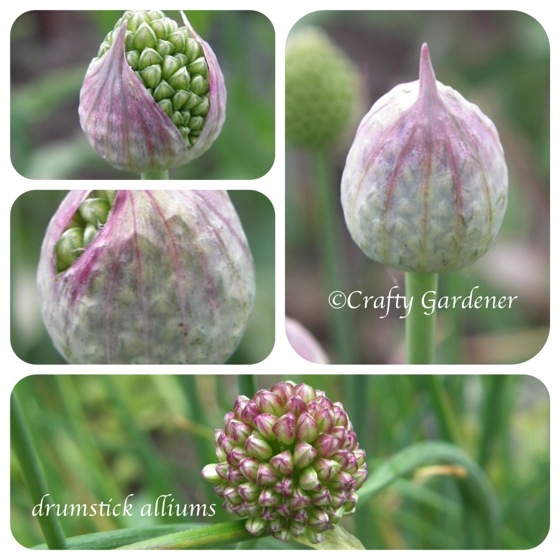
The drumstick alliums, which are ornamental onions, are in bloom right now. These herbaceous perennials have pretty, almost round, purple blooms which appear in early to midsummer.

Alliums are in the onion genus and includes onions, chives, garlic, scallions and leek.

The flowers first appear green and seem to take forever to open. They grow best in full sun in well drained soil. A bonus to growing drumstick allium is that deer and rabbits don’t nibble on them.

Read More


“Noted” items are particularly good finds from my daily reading which I share via all my social media accounts. 

Find more Noted/Shared Gardening items

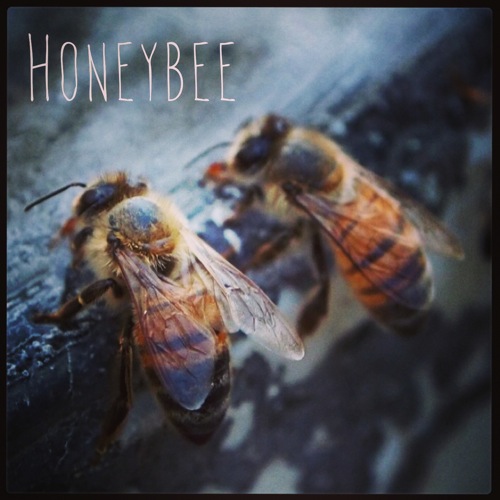
Garden Alphabet: Honeybee

Honeybee

It took some time to make peace with honey bees. I grew up with yards that were more clover than grass, so summer days often involved accidentally stepping on bees in the yard while we played. Along with that we had nasty mud dauber wasps that seem to sting you for no other reason than just being there. Add to that the ground dwelling bees that would sometimes well up when you were mowing the yard and it tended to make you a bit scared of anything that flew and sort of looked like a bee or wasp.

Garden Alphabet: Honey bee

Follow DouglasWelch in Instagram

I have learned over the years, though, how to identify a honey bee (and our somewhat bumbling huge carpenter bees) here in California. I am often showing people the difference between the gentle honey bee and the aggressive food scavenging yellow jacket wasps. I am always telling people that a honey bee doesn’t want to sting you because stinging means that it will die. Wasps, on the other hand, can (and do) sting multiple times without too much ill effect.

I have walked through clouds of honeybees who have been naturally swarming near trails and such and find them a docile, if acoustically intimidating, companion. Their buzzing can get quite loud in mass and I think this scares a lot of people, too.

I don’t have room for honeybees here in my yard, but I think in different circumstances I might become a beekeeper, tending my flock for the benefit of us both.

Honey bees (or honeybees) are bees of the genus Apis, primarily distinguished by the production and storage of honey and the construction of perennialcolonial nests fromwax. Honey bees are the only extant members of the tribe Apini, all in the genus Apis. Currently, only seven species of honey bee are recognized, with a total of 44 subspecies,[1]though historically, from six to 11 species have been recognised. Honey bees represent only a small fraction of the roughly 20,000 known species of bees. Some other types of related bees produce and store honey, but only members of the genus Apis are true honey bees.

The study of honey bees is known as apiology.

Honey bees appear to have their center of origin in South and Southeast Asia (including the Philippines), as all but one (i.e. Apis mellifera), of the extant species are native to that region. Notably, living representatives of the earliest lineages to diverge (Apis florea andApis andreniformis) have their center of origin there.[2]

The first Apis bees appear in the fossil record at the EoceneOligocene boundary (23–56 Mya), in European deposits. The origin of these prehistoric honey bees does not necessarily indicate Europe as the place of origin of the genus, only that it occurred there then. A few fossil deposits are known from South Asia, the suspected region of honey bee origin, and fewer still have been thoroughly studied.

No Apis species existed in the New World during human times before the introduction of A. mellifera by Europeans. Only one fossil species is documented from the New World, Apis nearctica, known from a single 14-million-year old specimen from Nevada.[3]

The close relatives of modern honey bees—e.g. bumblebees and stingless bees—are also social to some degree, and social behavior seems a plesiomorphic trait that predates the origin of the genus. Among the extant members of Apis, the more basal species make single, exposed combs, while the more recently evolved species nest in cavities and have multiple combs, which has greatly facilitated their domestication.

Most species have historically been cultured or at least exploited for honey and beeswax by humans indigenous to their native ranges. Only two of these species have been trulydomesticated, one (A. mellifera) at least since the time of the building of the Egyptian pyramids, and only that species has been moved extensively beyond its native range.

Today’s honey bees constitute three clades.[1][4]  — Wikipedia

More information on Honey bees:

Bee books, information and more on Amazon.com

* A portion of each sales directly supports A Gardener’s Notebook
** These books and others may be available in your local library. Check it out!
 
Previously in Garden Alphabet:

Noted: Great Design Plant: Prairie Phlox Draws Winged Beauties via Houzz

Great Design Plant: Prairie Phlox Draws Winged Beauties via Houzz

 
The splashes of bright pink, fragrant flowers of prairie phlox are a welcome addition to any landscape border or edge. This is an extremely adaptable native plant that thrives in most soil types, except pure sand or pure clay. The long-lasting flower clusters attract butterflies and moths in particular; these long-tongued pollinators visit to feed on the flower’s nectar. Prairie phlox flowers in early spring before cool-season prairie grasses begin to compete for light and real estate, maximizing its potential to attract pollinators.


“Noted” items are particularly good finds from my daily reading which I share via all my social media accounts. 

Find more Noted/Shared Gardening items

Noted: The Simple Secret to Gardening Success via Houzz

The Simple Secret to Gardening Success via Houzz

 
Avid gardeners and those in the landscape industry talk about soil a lot. Clay, sand, topsoil, mulch, amendments, compost — we throw around these terms regularly because the ground is so essential to what we do. For anyone who claims to have a “black thumb,” I would like to let you in on a little gardening secret: Successful gardens begin with the soil.
 

“Noted” items are particularly good finds from my daily reading which I share via all my social media accounts. 

Find more Noted/Shared Gardening items

Video: In the garden…July 17, 2014: Sweet potatoes run amuck, containers revive and cuttings grow

Agn artwork

I check in on our sweet potatoes which are so vigorous the neighbors are beginning to notice, watch as the container garden rejuvenates and check in on the basil cuttings we potted up last week.

Video: In the garden…July 17, 2014: Sweet potatoes run amuck, containers revive and cuttings grow

Check out my collection of gardening essays, “From A Gardener’s Notebook” now available as a Kindle eBook. (You don’t need a Kindle to read it, though. Read it on your PC, Link: http://j.mp/fagnbook

Watch all past episodes of “In the garden…” in this YouTube Playlist


Music: “The One” by the Woodshedders (http://musicalley.com)

Please Like this video and/or subscribe to my channel on YouTube.

Your likes and subscriptions directly reflect how many other viewers are suggested this video.

Subscribe to my YouTube Channel


“In the garden…” is a series for A Gardener’s Notebook highlighting what is happening in my garden, my friend’s gardens and California gardens throughout the seasons.